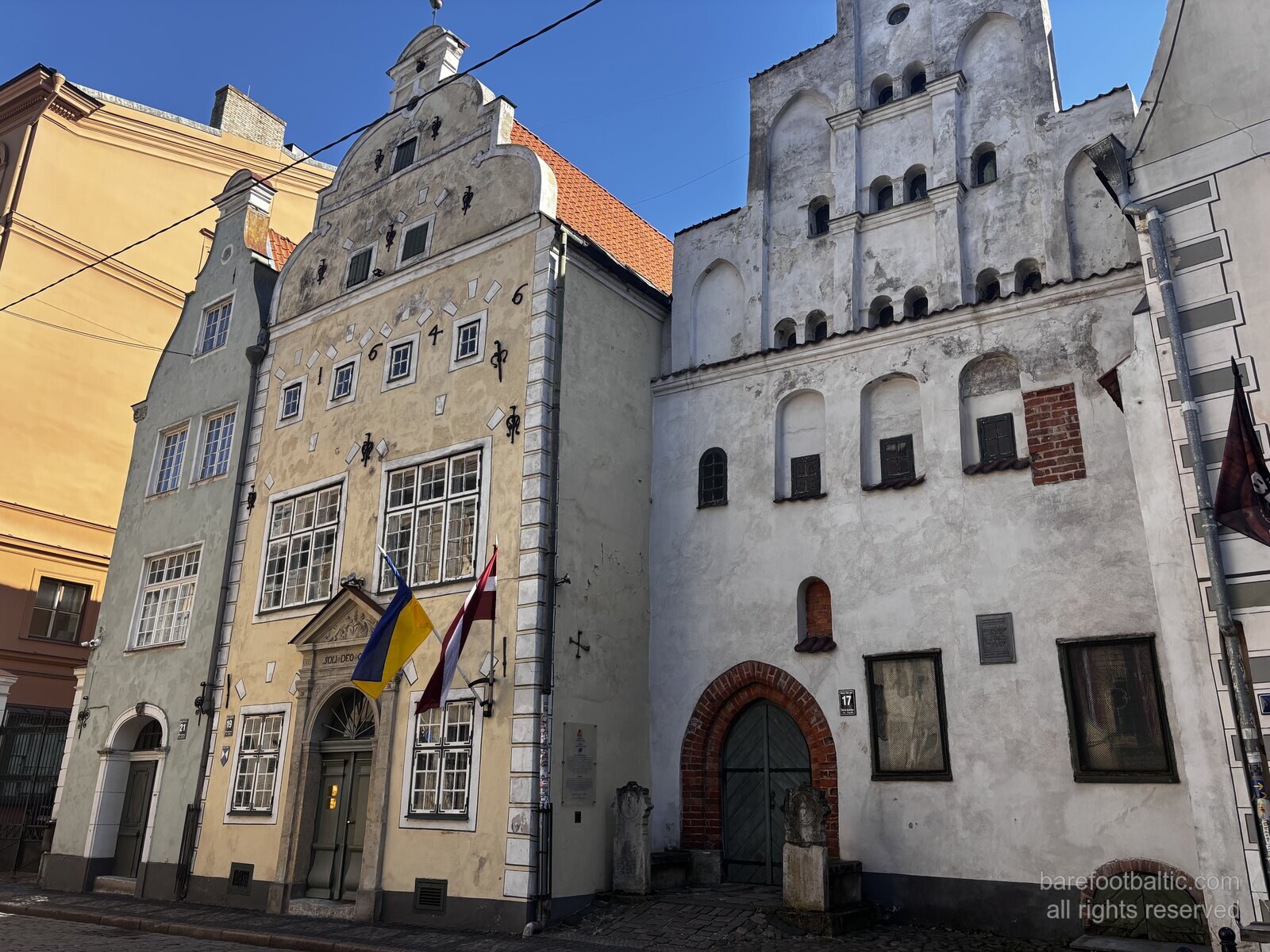
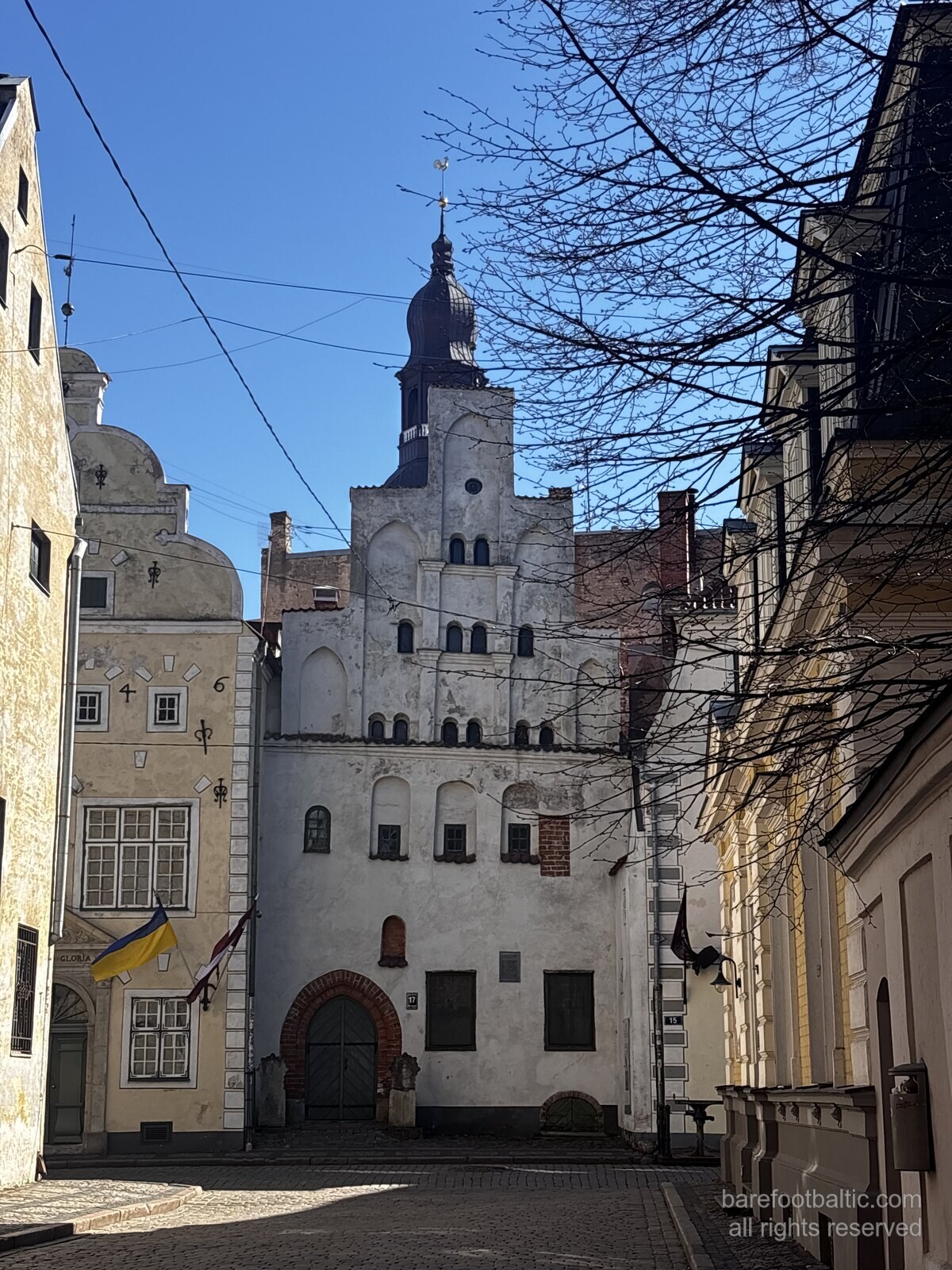
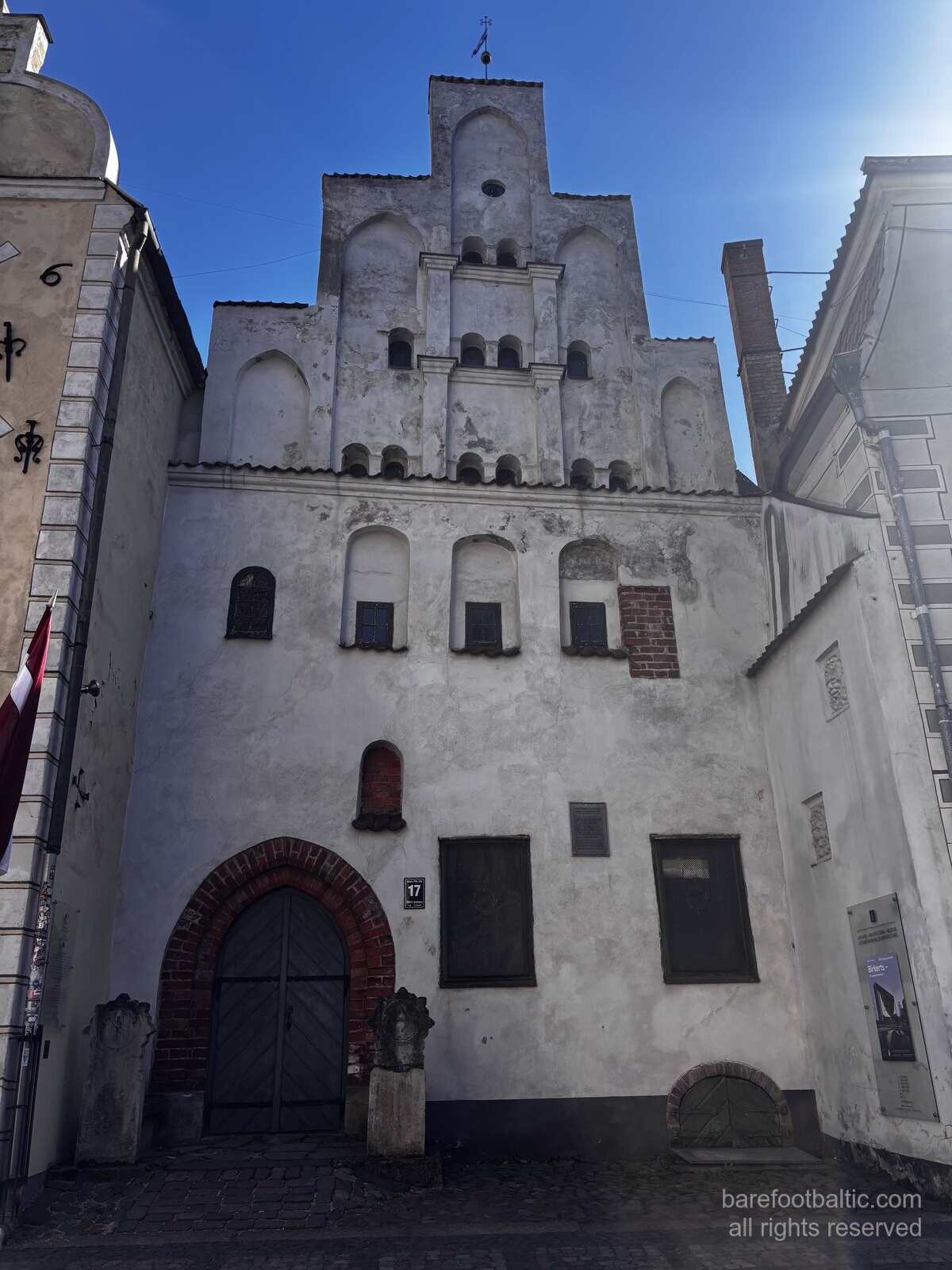
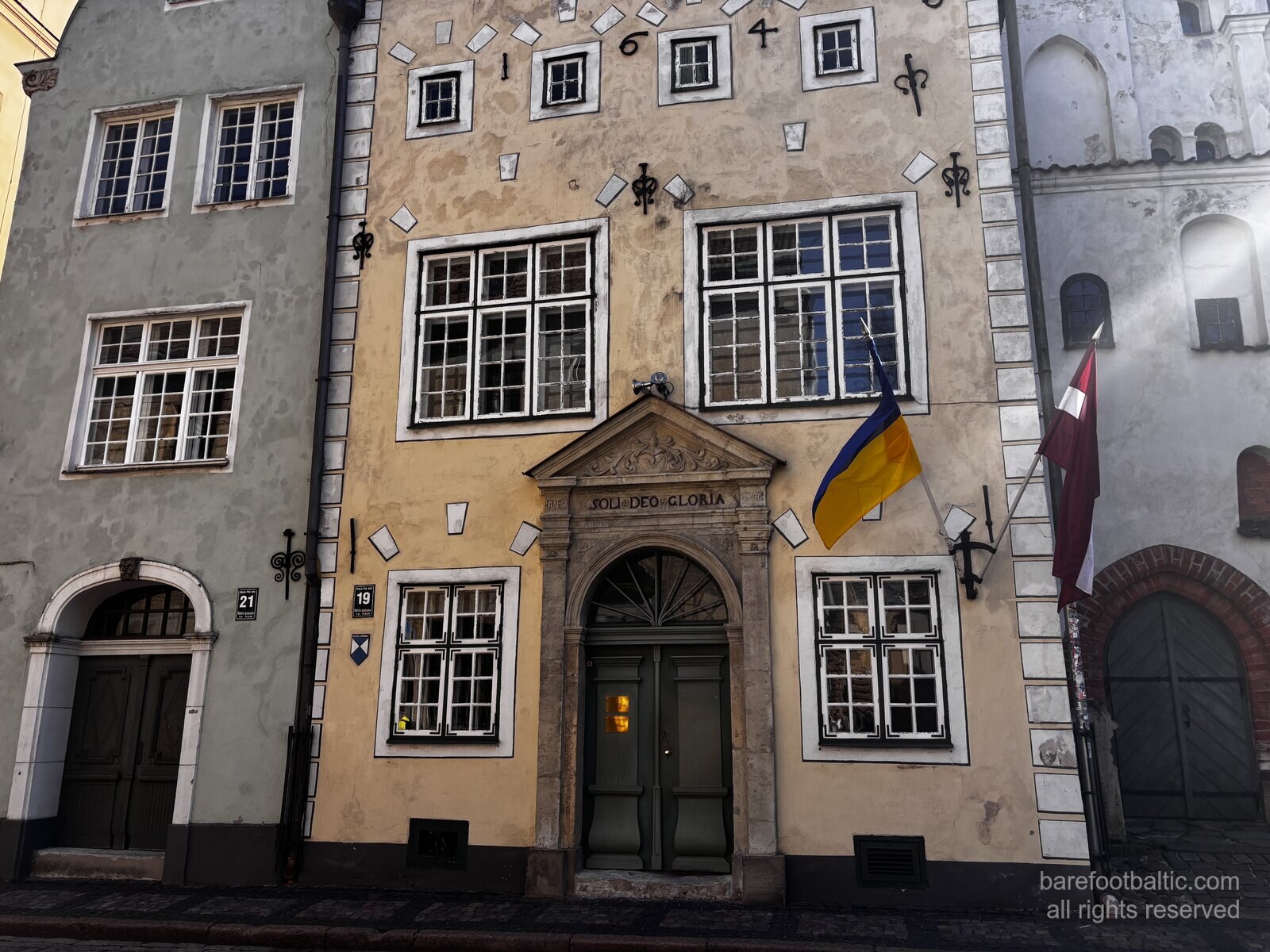
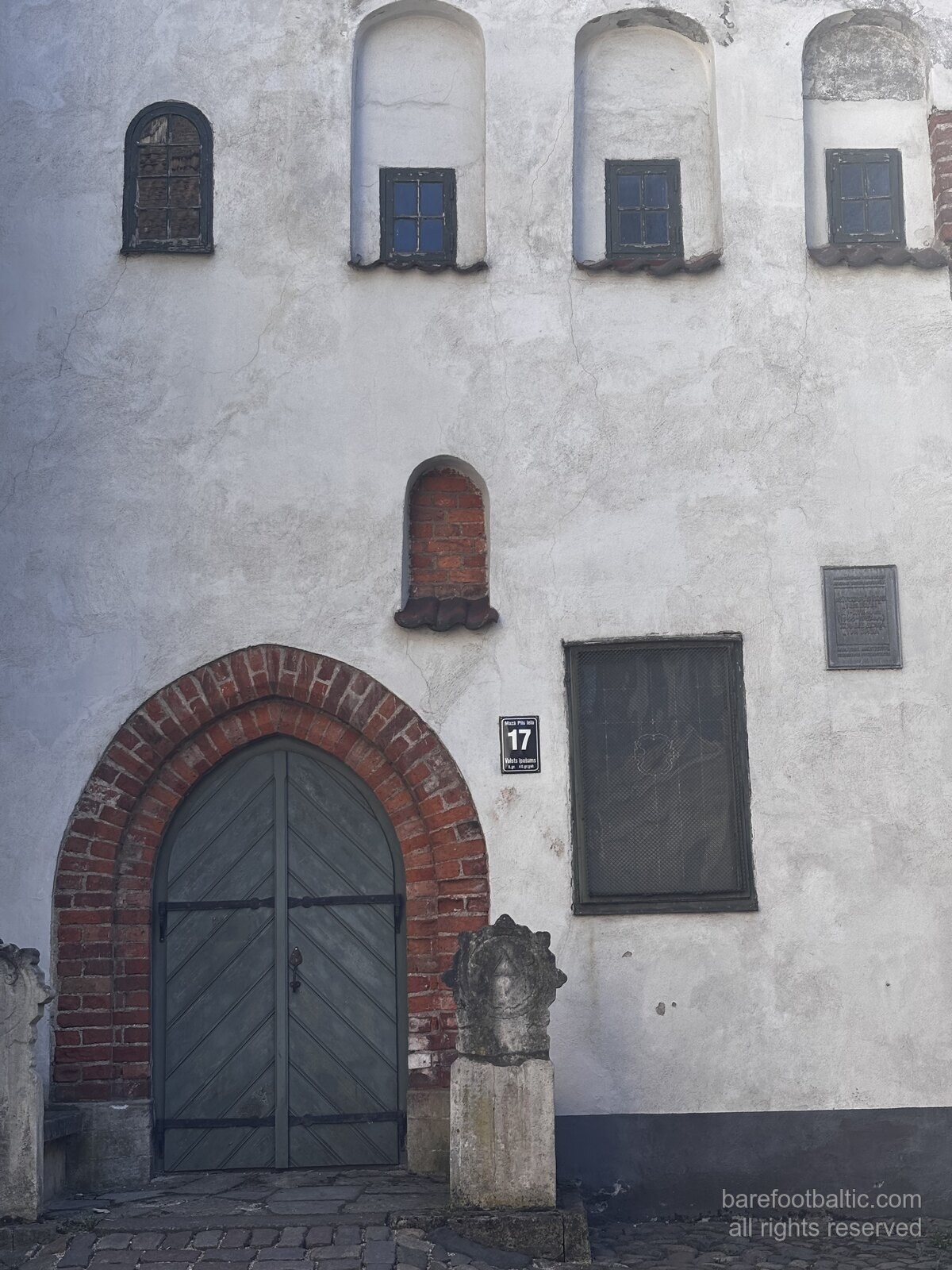
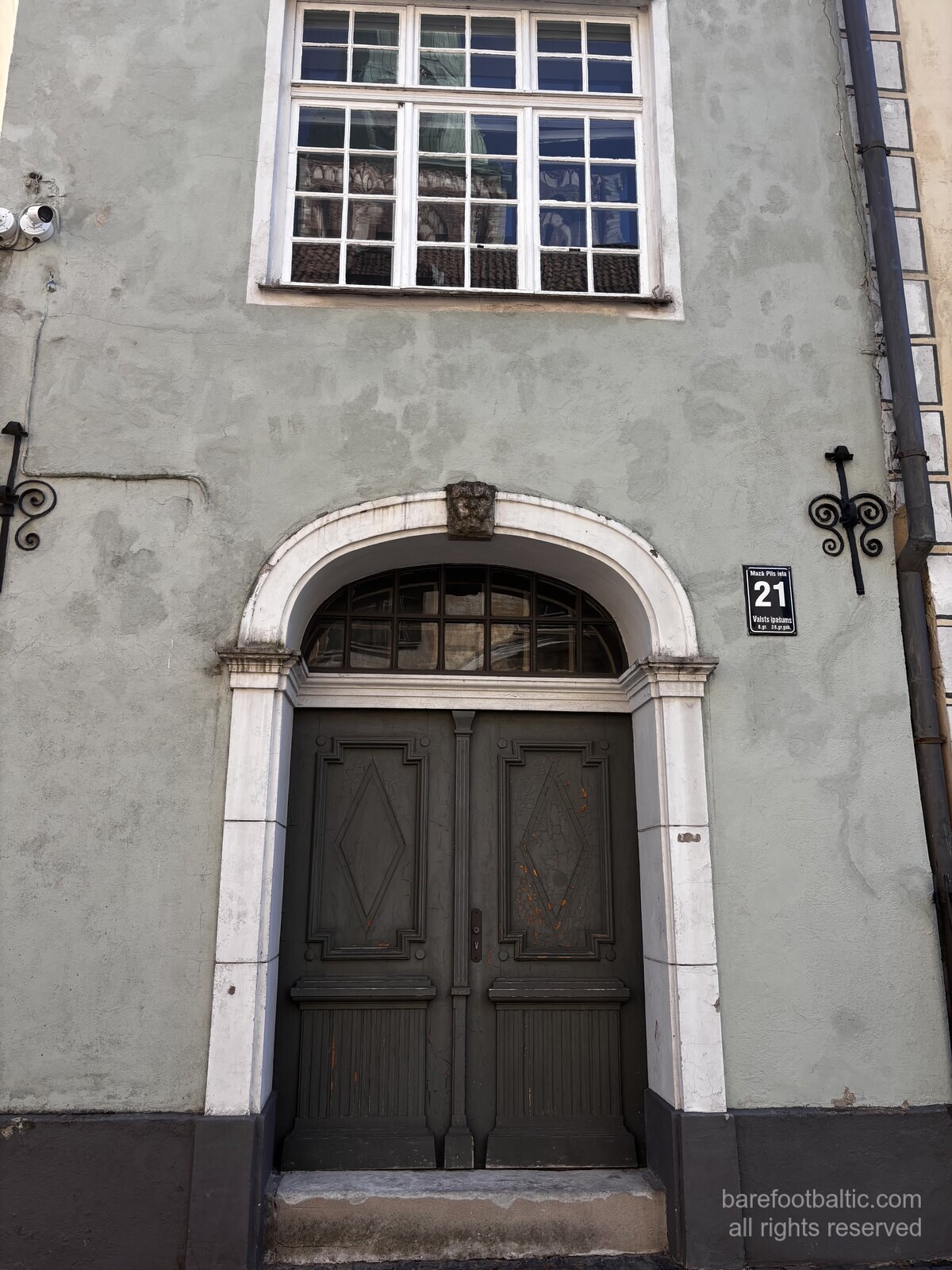
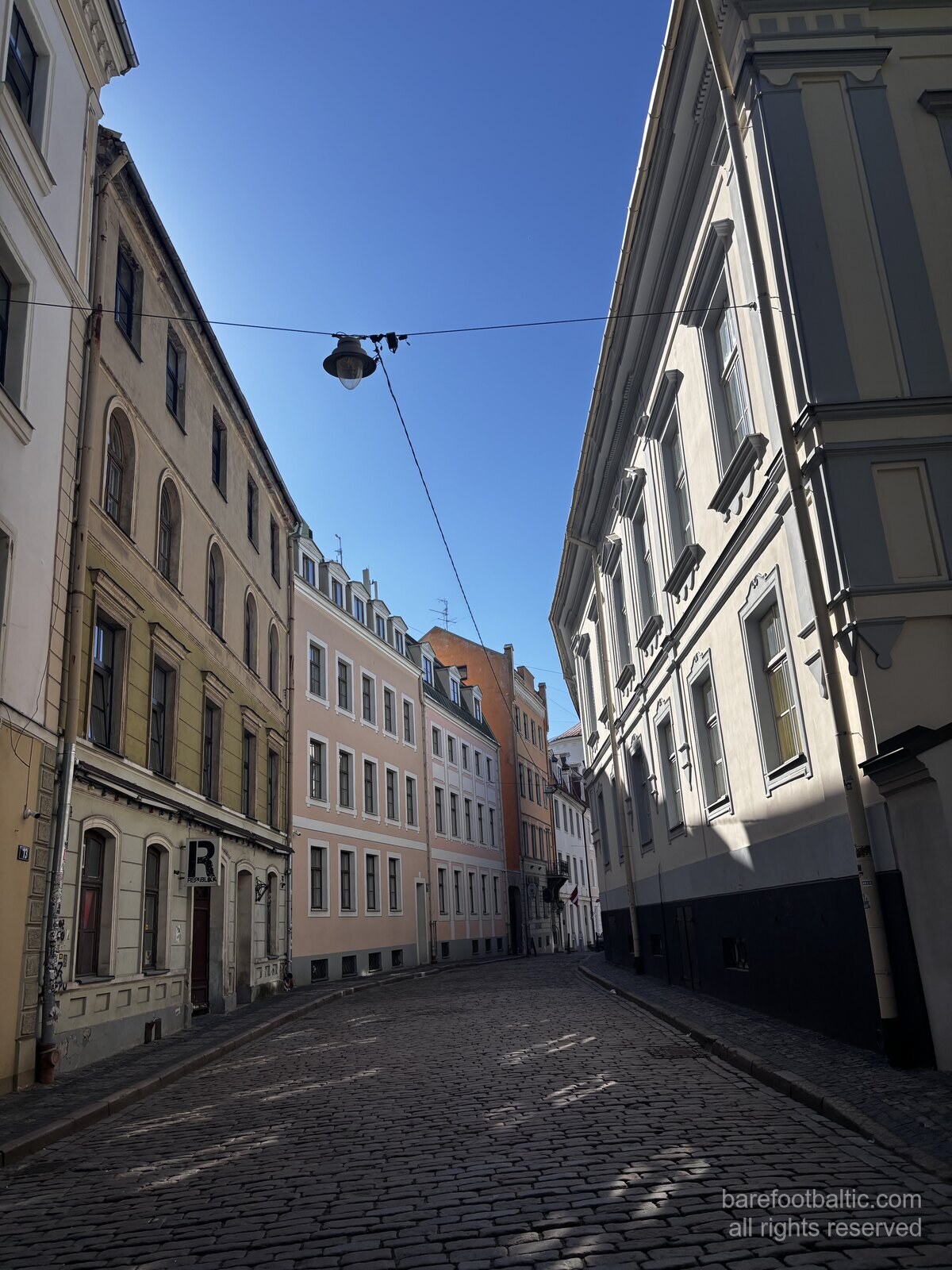
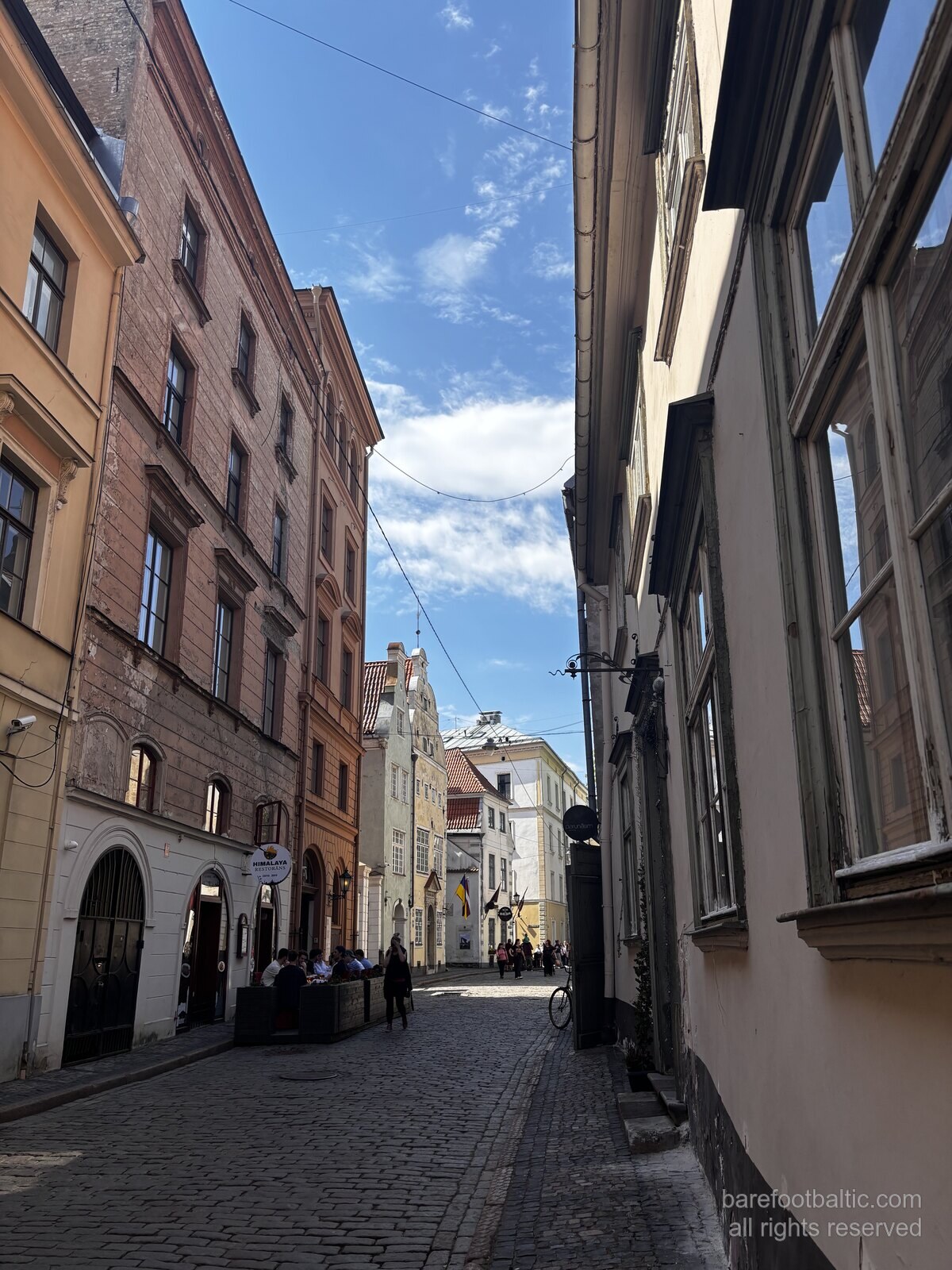
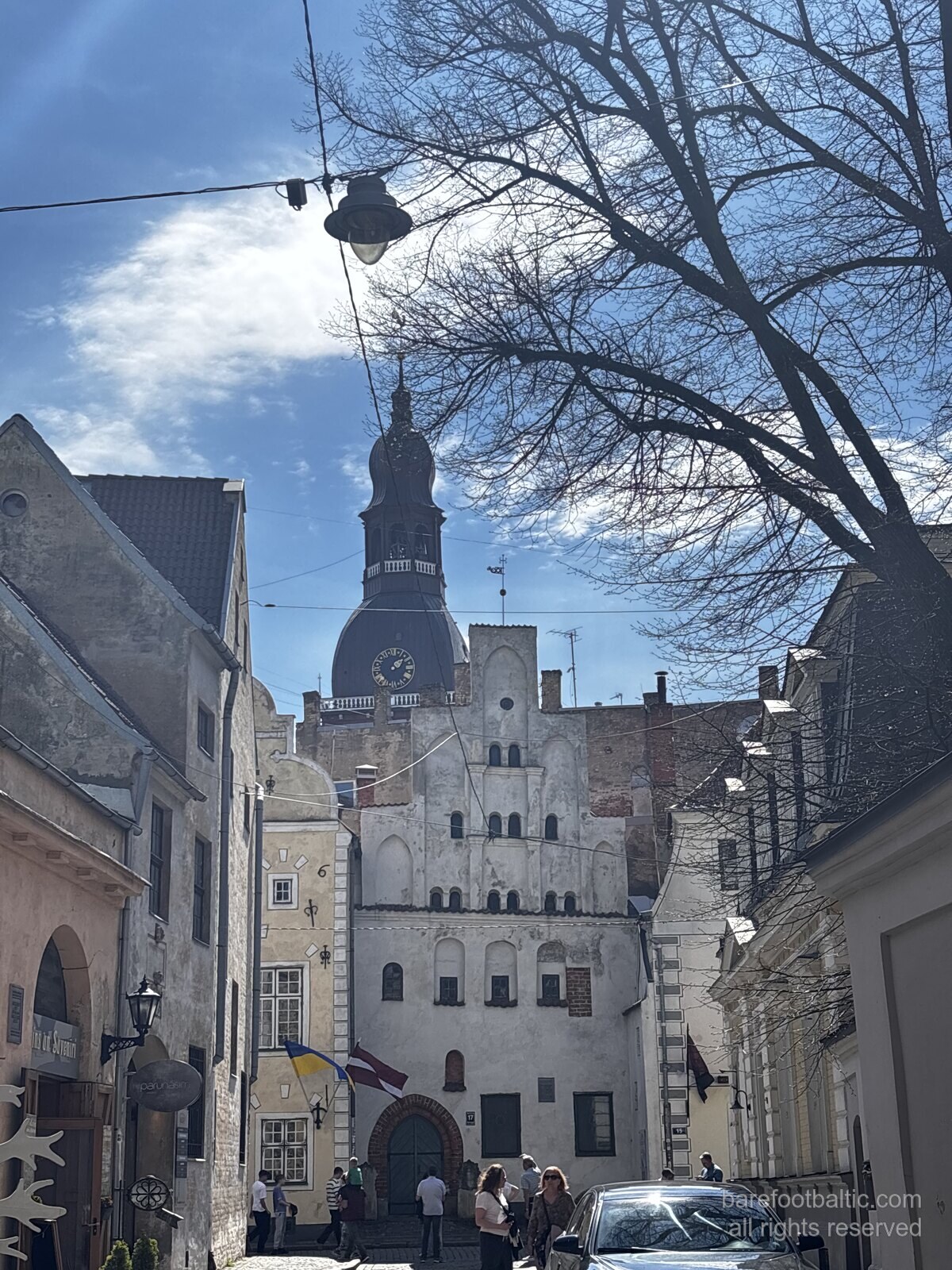
Three houses from three different centuries on one short stretch of Mazā Pils iela. Click any image for the full-size view.
Short answer, what the Three Brothers are
The Three Brothers (in Latvian, Trīs brāļi) are three medieval-to-baroque dwelling houses standing side by side at Mazā Pils iela 17, 19, and 21, in the western half of Riga’s Old Town. Each one is from a different century. Together they are the only surviving cluster of pre-industrial private houses in Riga, and number 17 in particular is the oldest stone dwelling house in the city.
The quick facts, before the rest.
- Number 17. Late Gothic, around 1490. White stepped gable, the oldest. Stone, two storeys plus attic.
- Number 19. Built in 1646 (date carved on the facade). Dutch Mannerist / early baroque. Yellow with stone window-surrounds. Currently houses the Latvian Museum of Architecture.
- Number 21. Late 17th century, early 18th. Baroque. Grey-green facade, narrower than the others.
- Free to view from outside. The museum inside number 19 has a small entry fee.
- Five-minute walk from Riga Cathedral, ten from the Freedom Monument.
If you are walking the Old Town and you have only one minute on Mazā Pils iela, stand opposite number 17 and look at the three of them as a row. That’s the famous view. The rest of this is what you’re actually looking at, and why each one is different.
Number 17, the oldest stone dwelling in Riga
Number 17 is the white house on the right as you face the row from across the street. The stepped gable, the round-headed niches, the small windows in the upper storey are all late Gothic, all from a building completed somewhere around 1490. There’s some debate about the exact date. Latvian architectural historians put it between 1480 and 1500, depending on which timber-and-mortar samples they trust, but the consensus is that this is the oldest surviving stone-built dwelling house in Riga. Older than the New World. Older than the Reformation. Older than the printing press, by a hair.
The two interesting features to look for, up close. First, the door. The arched brick portal itself is original, even if the heavy timber doors hung in it now are 19th-century replacements. Look at the small carved stone set into the wall to the right of the door. That’s a guardian carving, the medieval equivalent of a saint’s niche, defaced during the Reformation in 1524 like most of its siblings. Second, the niches in the upper facade. Those small recessed bays were originally for storage shutters. A medieval town-house combined dwelling, warehouse, and shop in one structure, and the upper niches held grain and dry goods. The shutters are gone. The niches remain.
One small Riga thing about number 17. The street level here, like at the cathedral five minutes away, is roughly two metres higher than it was in 1490. The original ground-floor windows are now half-buried below the cobblestones. What you’re seeing is an upper part of an originally taller building, slowly drowning in the rising city.
Number 19, the dated middle brother
Number 19 is the yellow one in the middle, and it has a date carved on its facade you can read from the street. 1646. The full inscription above the door reads SOLI DEO GLORIA (Latin for ‘to God alone be the glory’), and the architectural style is Dutch Mannerism, early baroque, with stone surrounds around the windows that the late-Gothic number 17 next door entirely lacks. By 1646 Riga was a Hanseatic merchant city under Swedish administration. The merchant who built this house was reaching for the architectural fashion of Amsterdam, not the modest stone of medieval Livonia.
Number 19 is also the one that is open to the public. Since 1972 it has housed the Latvian Museum of Architecture (Latvijas Arhitektūras muzejs), one of the smaller Riga museums. Entry is around €3, opening hours are roughly Tuesday to Friday 09:00 to 17:00 (shorter on Saturdays, closed Sundays and Mondays). It’s a niche museum (architectural drawings, models, building fragments) and probably not worth your time if you’re only here for two days. It’s very worth your time if you’re an architect, an architecture student, or someone whose idea of a good afternoon includes looking at hand-drawn plans of timber farmhouses. The building itself is the main interest. The courtyard behind it is open and free, and the rear elevations show how a 17th-century Riga merchant house actually worked.
Number 21, youngest of the three
Number 21 is the grey-green one on the left as you face the row, and is the youngest of the three. Late 17th or early 18th century, baroque, narrower than the other two. The doorway is plainer. The windows have simpler stone surrounds, and the gable is taller and steeper. This was the small house in the row when it was built. The plot it sits on is narrower than its older neighbours, because by 1700 Riga was densely built and the easy plots had been taken.
Look at the door knocker on number 21 if you stop in front of it. The metalwork (most of it 19th-century replacement, but in the original style) carries the merchant’s mark of the family that owned the house in the 1700s. Riga merchant houses were identified by their house-mark before street numbers existed. Some of those marks survive on doorframes around the Old Town if you know where to look.
The thing about the Three Brothers is that they aren’t a project. They’re three different houses by three different families across three different centuries that just happened to end up next to each other.
Daiga, walking past these for the eight-thousandth timeMazā Pils iela, the lane itself
The Three Brothers are the headline, but the rest of Mazā Pils iela is worth twenty minutes too. The street runs roughly north from Riga Castle down to the cathedral quarter, and is one of the best-preserved short streets in the medieval Old Town. The cobblestones are uneven, so watch your footing. The buildings on either side are mostly 18th-century, with a few 17th-century survivors mixed in. The lane is properly quiet most of the day, even in summer.
Here is what I tell visitors. Come here at 8:00 in the morning. The street is empty. The light is at a low angle and bouncing off the wet cobbles. The cafés haven’t opened. You can stand opposite the Three Brothers and have the view to yourself for ten minutes, easily, and the photographs are better than the ones you’ll take in the middle of the day. By 11 the day-trip groups arrive, the lane fills up, and you’ll be queuing for the angle. Early is the answer.
If you’re here in the late afternoon instead, walk up Mazā Pils to the Castle and back the other way. That gives you the row of houses with the cathedral spire visible above the rooftops to the south, the photograph you’ll see on a lot of Riga postcards. Then drop into one of the small cafés on the parallel street (Pils iela) for coffee.
Practical answers
Where they are and how to find them
Mazā Pils iela 17, 19, 21, in the western half of Riga’s Old Town, between the cathedral quarter and Riga Castle. From Riga Cathedral, walk north on Pils iela for two minutes, then turn right onto Mazā Pils. You’ll see the row immediately. From the Freedom Monument, ten minutes through the Old Town. There’s no transport that drops you closer. The Old Town is largely pedestrianised and you’ll arrive on foot.
Hours, costs, and what’s actually open
The exterior is free and open 24/7. The houses are on a public street. The Latvian Museum of Architecture inside number 19 is open Tuesday to Friday 09:00 to 17:00 and Saturday 11:00 to 17:00 (shorter in winter, closed Sundays and Mondays). Entry is around €3 for adults. The courtyard behind number 19 is free and accessible during museum hours.
Combining the Three Brothers with the rest of the Old Town
The Three Brothers fall into the western half of an Old Town walk. From here, three minutes north is Riga Castle. Five minutes south-east is Riga Cathedral. Ten minutes south is the House of the Blackheads. The full circuit is in the Old Town pillar guide. If you’re short on time and have to choose, the three sights I’d not skip are the Three Brothers, the cathedral, and the climb up St Peter’s tower.
Photography, what works
The standard photograph of all three houses in a row is taken from the opposite side of Mazā Pils, about ten metres south of number 17. There’s a single spot on the cobbles where the framing of all three is clean, and you’ll see it immediately because it’s where everyone else is standing. For the cathedral-spire-above-the-rooftops shot, walk to the southern end of Mazā Pils where it joins Klostera and look back. Best light is early morning. The row faces roughly south-east, so the sun lights the facades from about 7:00 to 10:00. Late afternoon throws the row into shadow.
My take
The Three Brothers are not a wow stop. No climb, no entry queue. You walk up to a row of three houses, you stand opposite them, you look at them for five minutes, and you walk on. The thing the photograph doesn’t communicate is that you are looking at a layered piece of European urban history compressed into ten metres of street frontage. A medieval merchant house, a Dutch-Mannerist Hanseatic house, and a baroque house. People who probably never met each other built them, and the row is still standing, still recognisably the buildings the names describe. Allow ten minutes, go early, read the dates on the facades.
Frequently asked questions about the Three Brothers
Daiga Taurīte is a licensed Latvian tour guide and co-founder of Barefoot Baltic. She runs small-group day excursions from Riga. She grew up here, spent two decades in London, came home in 2024. Barefoot Baltic is licensed by Latvia’s Consumer Rights Protection Centre (PTAC), holds ATD passenger transport licence PS-01995, and is insured by BTA Baltic for civil liability.
The Three Brothers are on every walk we run through the western Old Town. If you’d like a half-day of Old Town with a licensed Latvian guide, building the Three Brothers, the Cathedral, the Castle and the Town Hall Square into one route, get in touch.