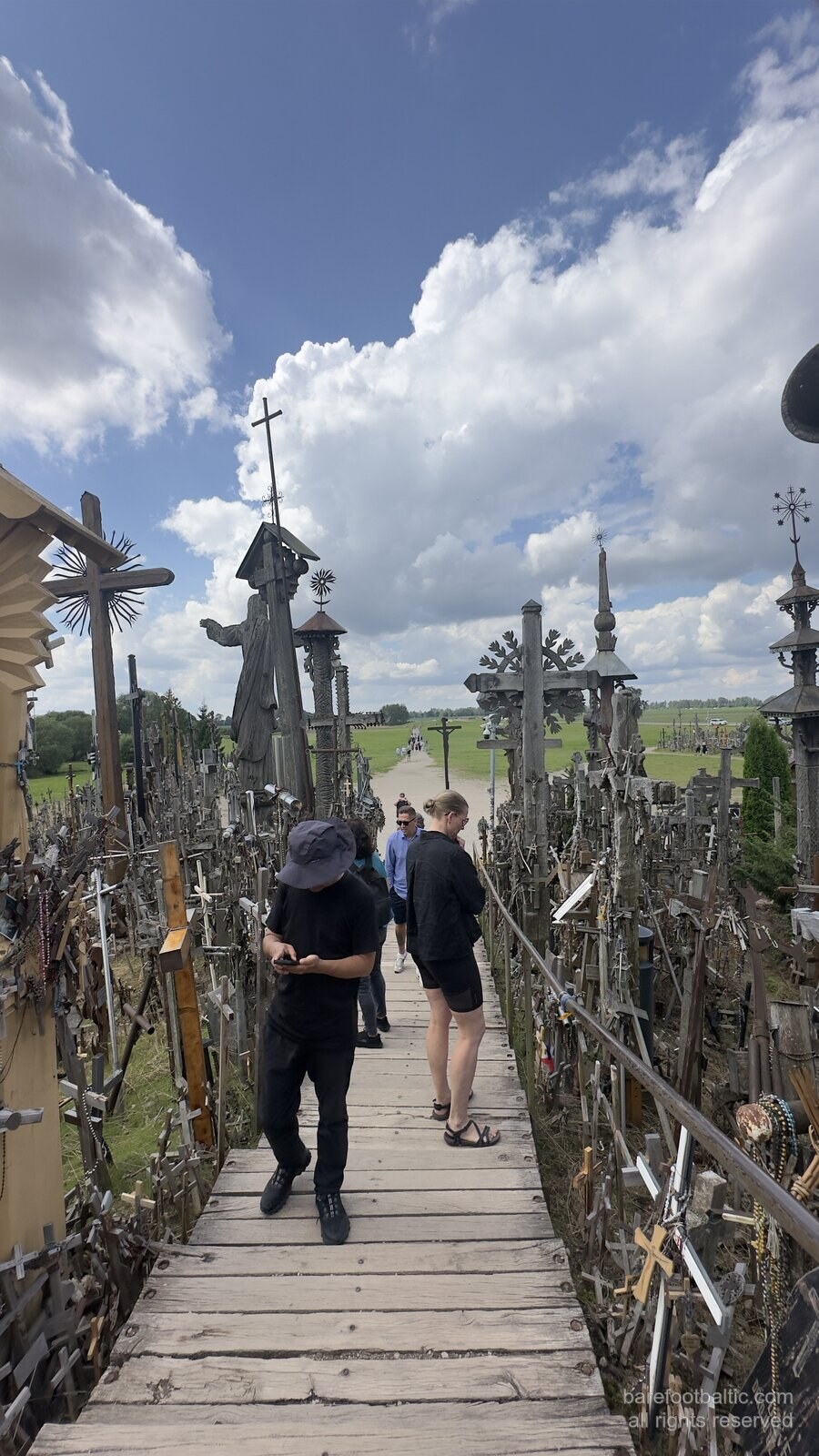
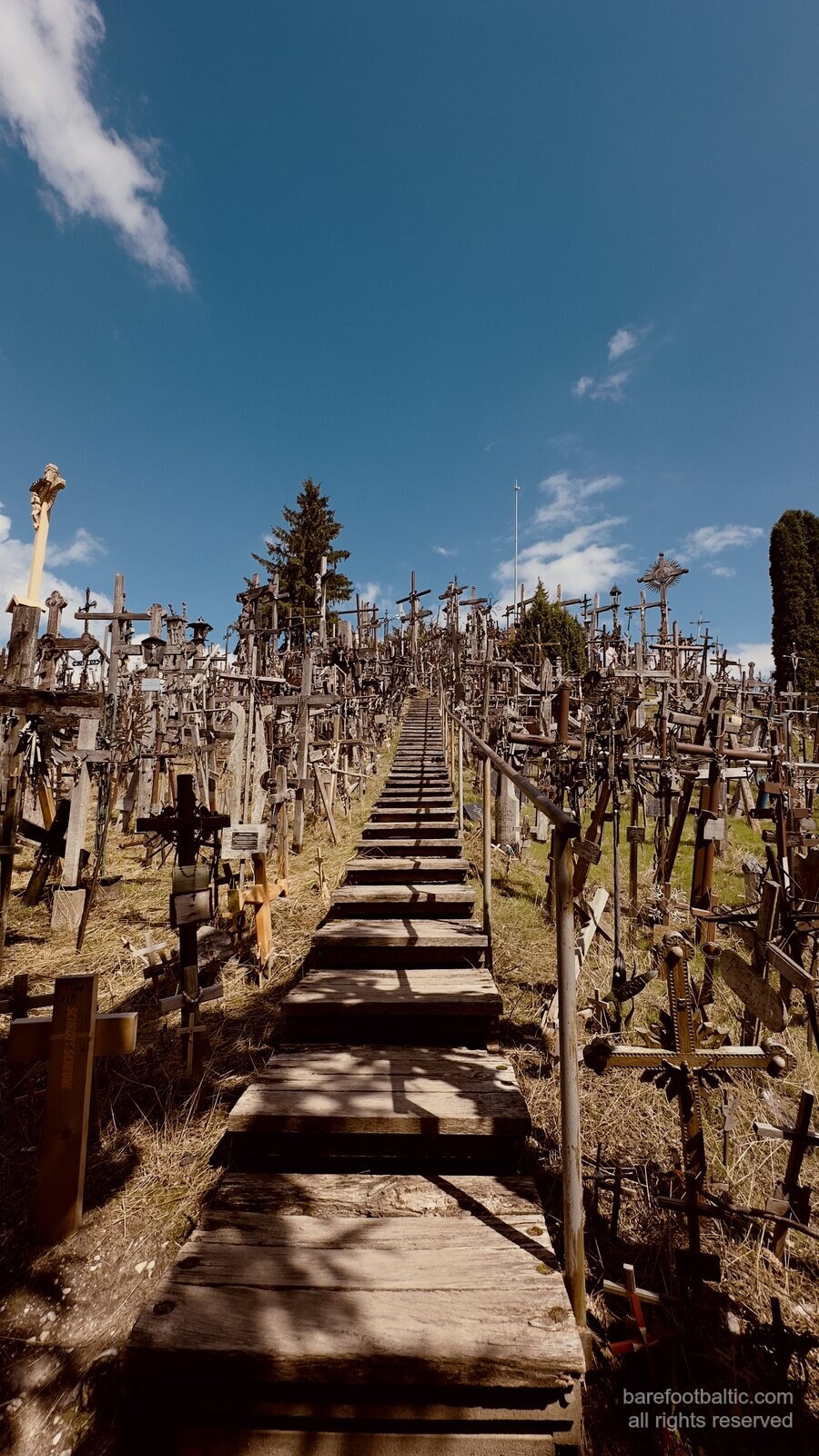
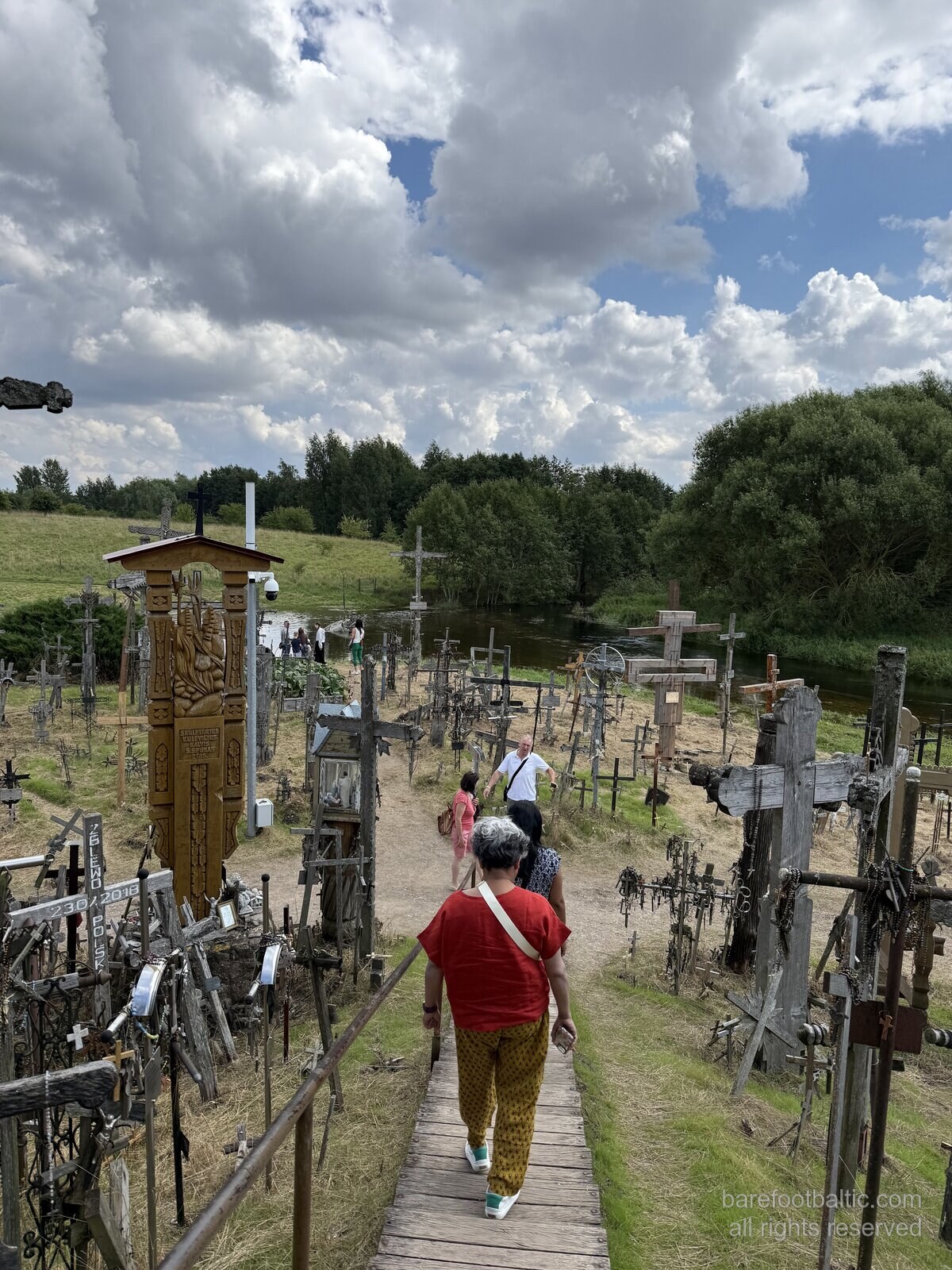
There is a small hill in northern Lithuania, about twelve kilometres from the city of Šiauliai, that does not look like much from the road. A mound, maybe ten metres high, in the middle of flat farmland. Then you get out of the car and you see what is on it, and you stop talking for a while.
Photos: the gallery below opens as a clickable lightbox. Tap any thumbnail or hero image to enlarge. Photographed across visits we have made with our guests.
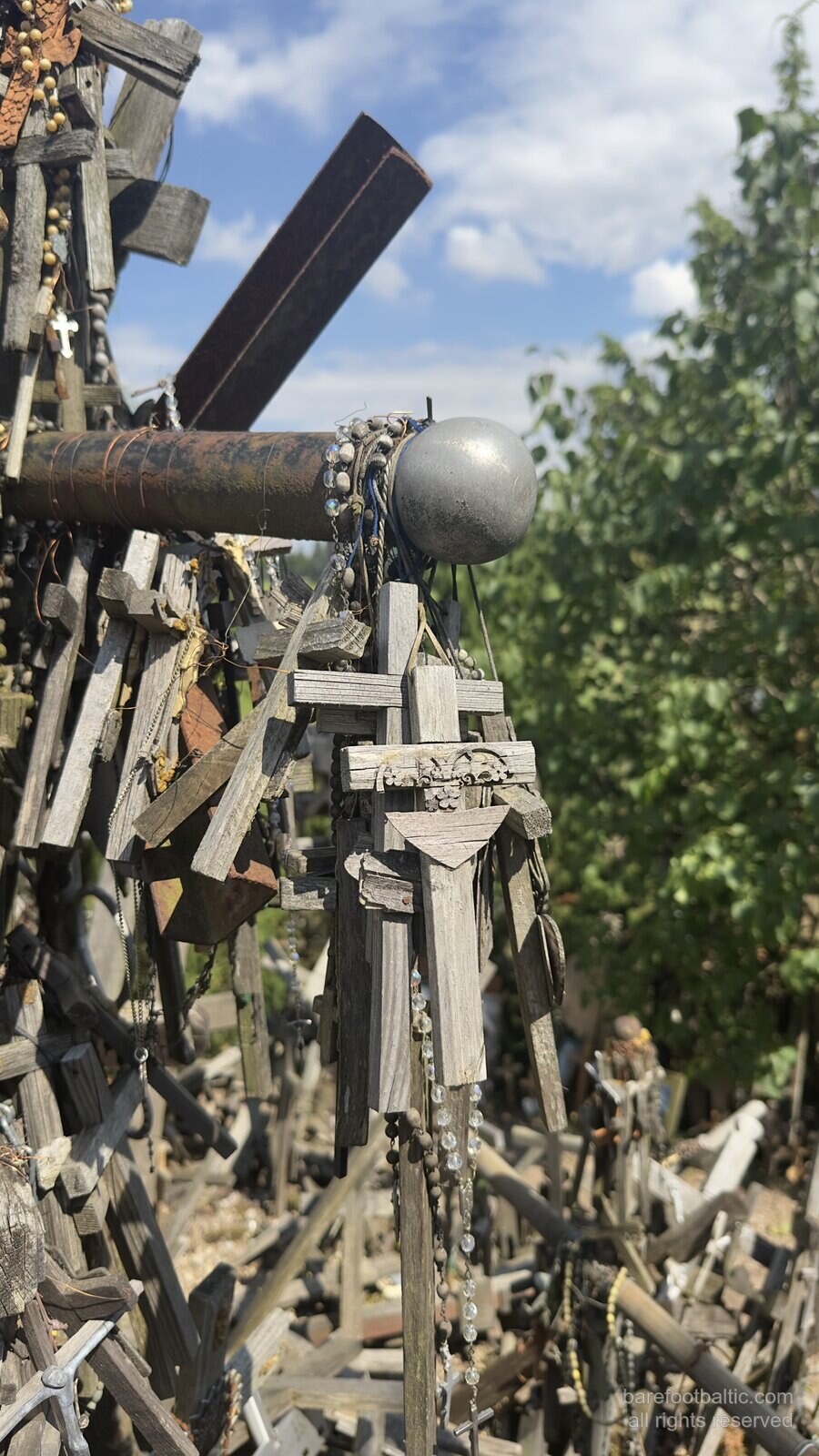
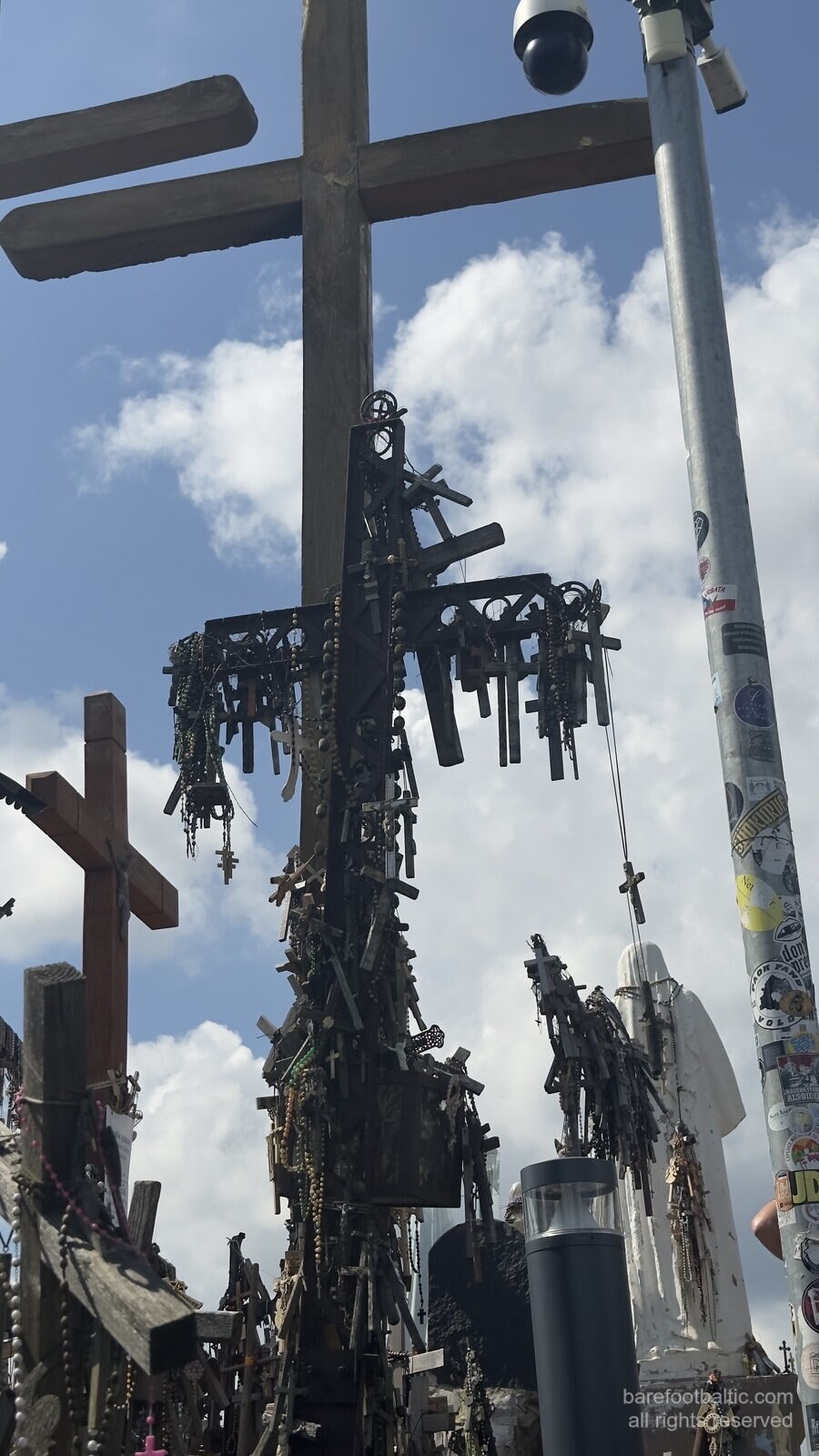
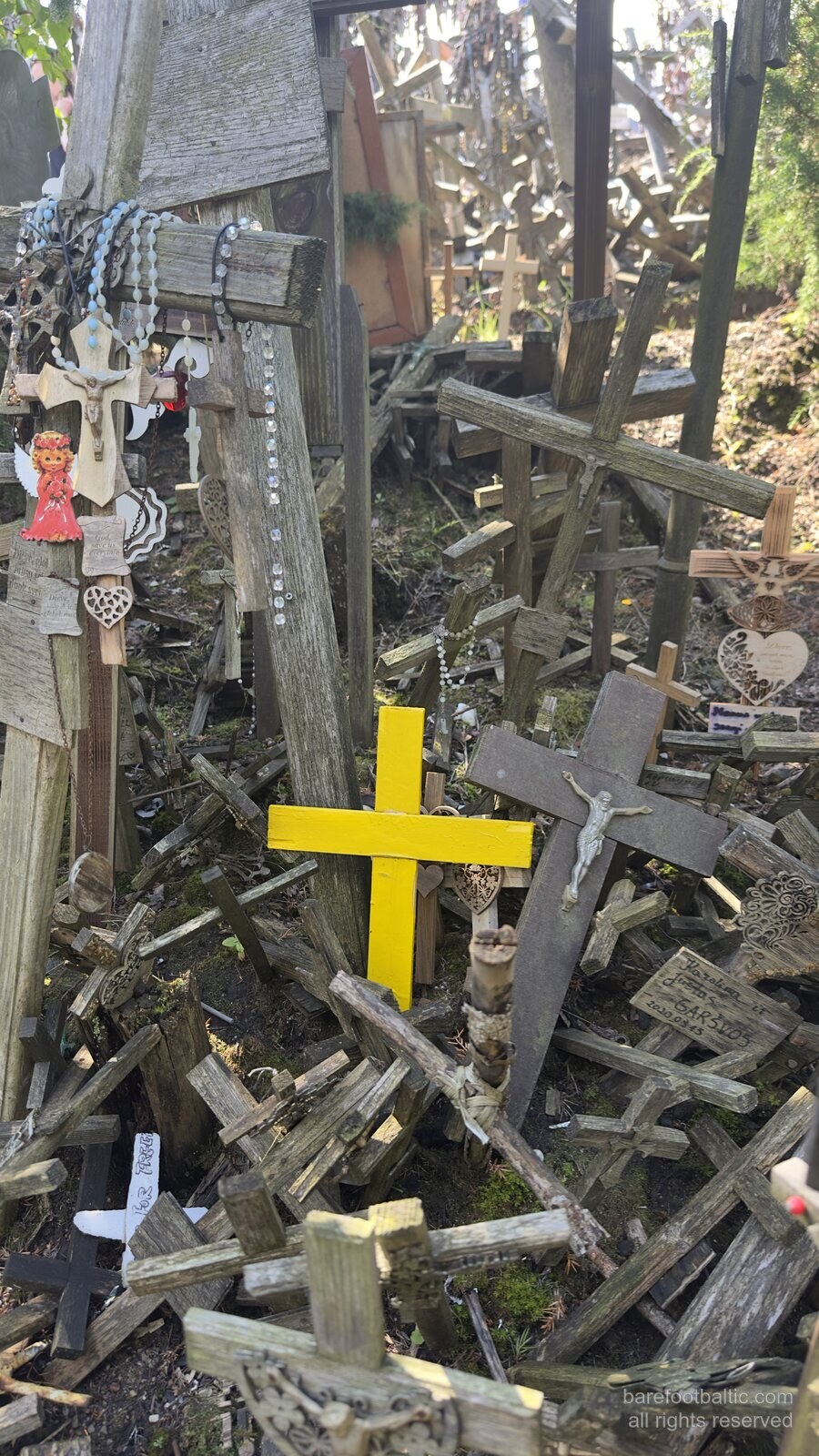
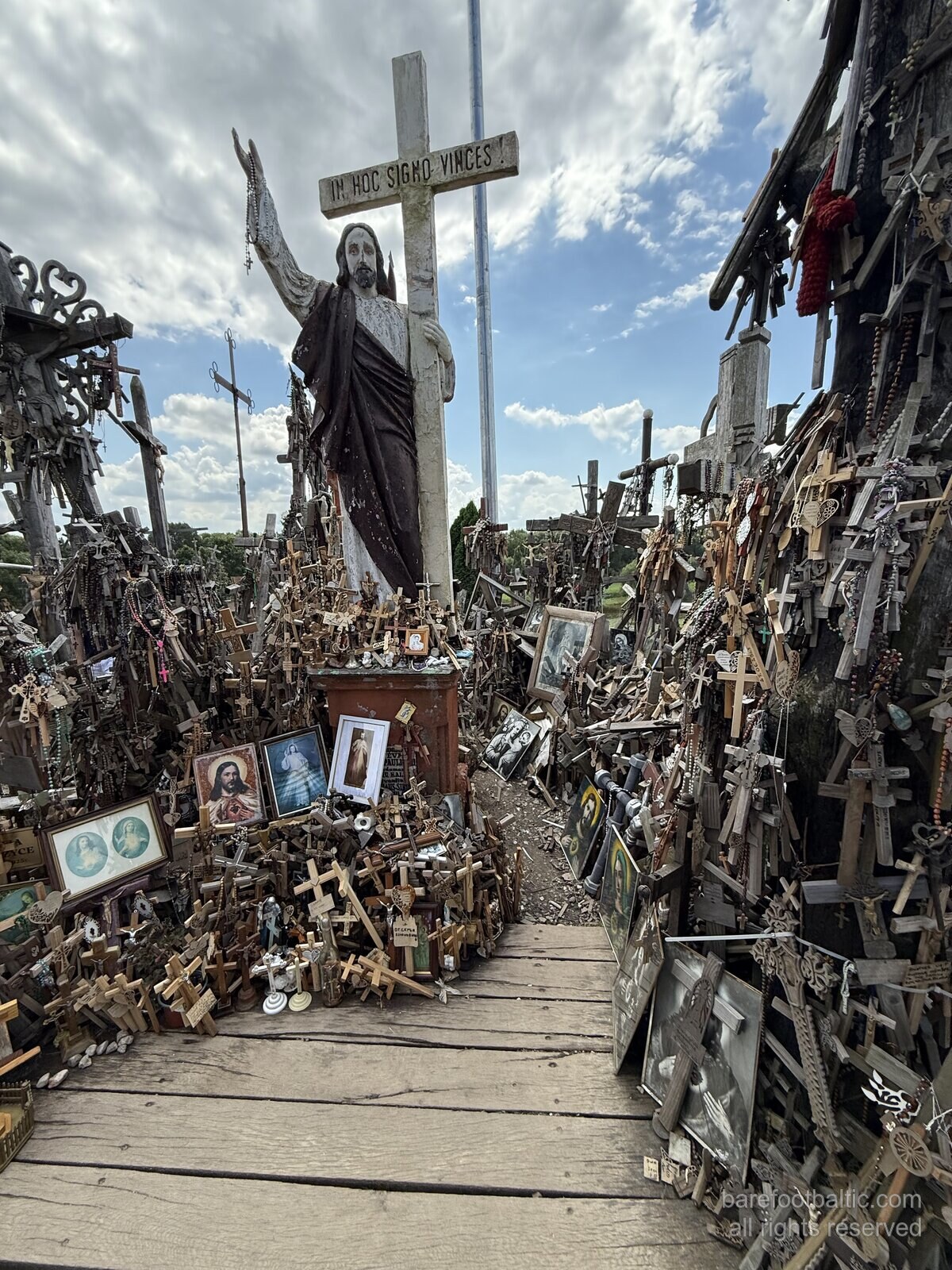
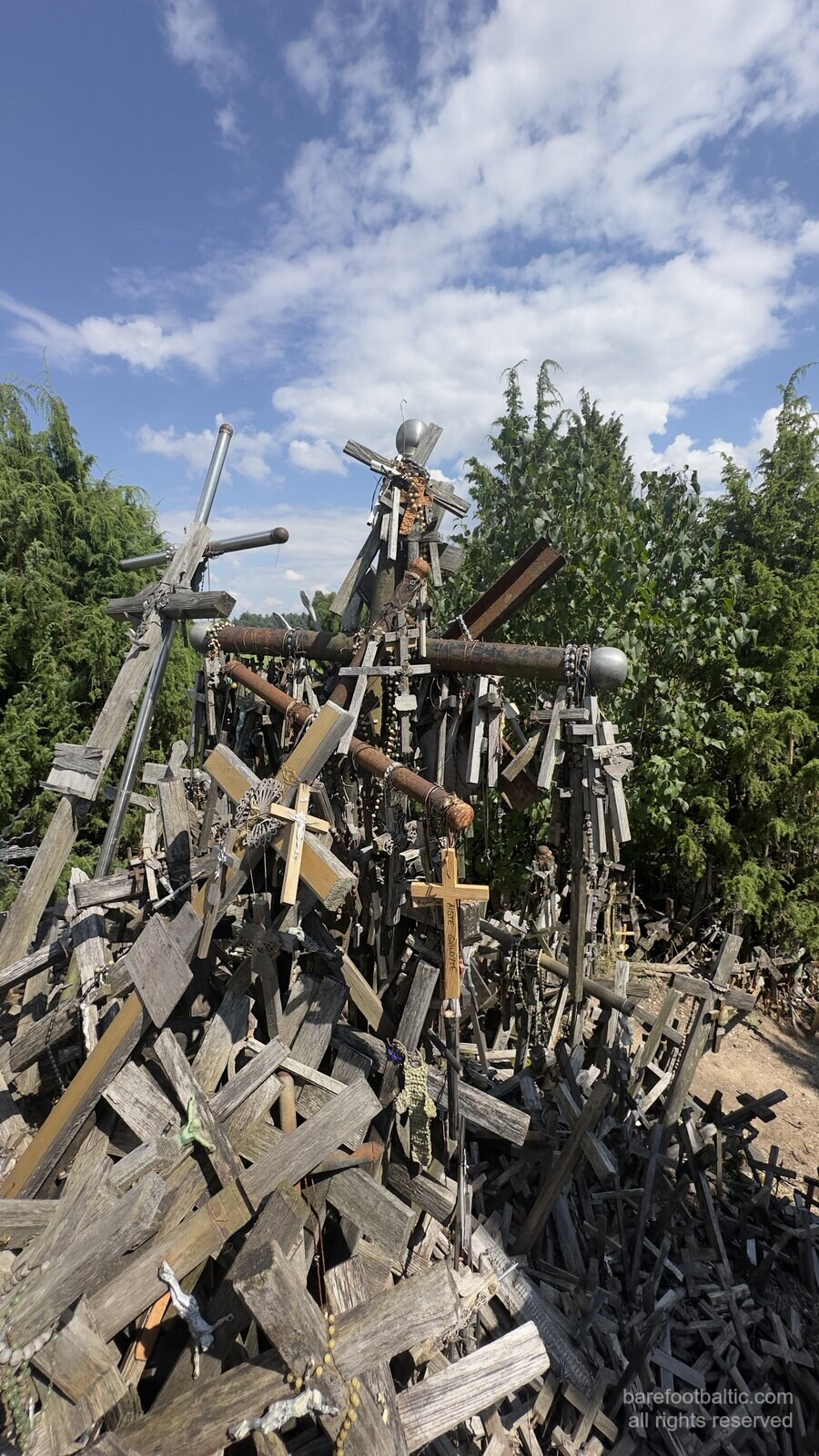
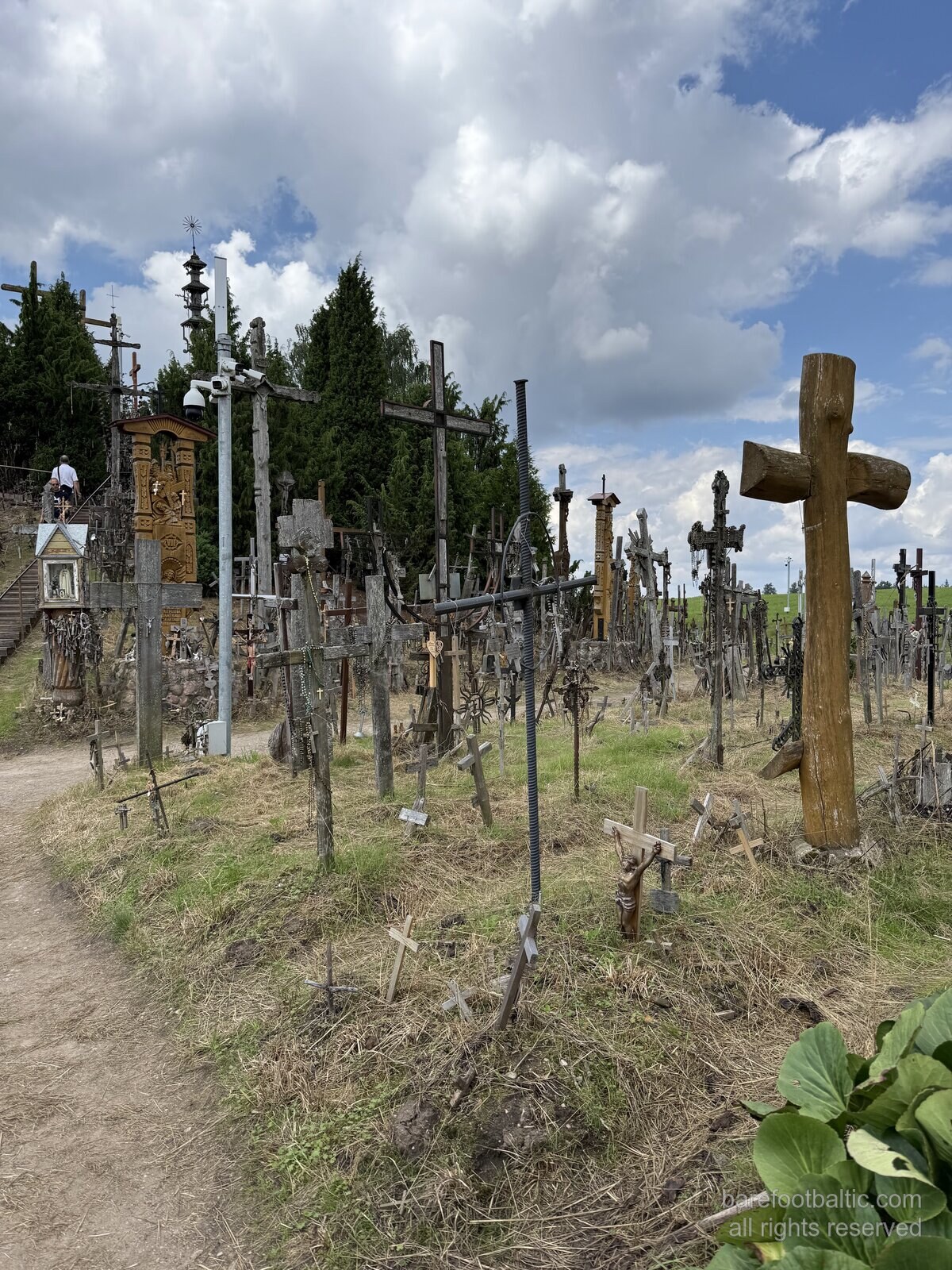
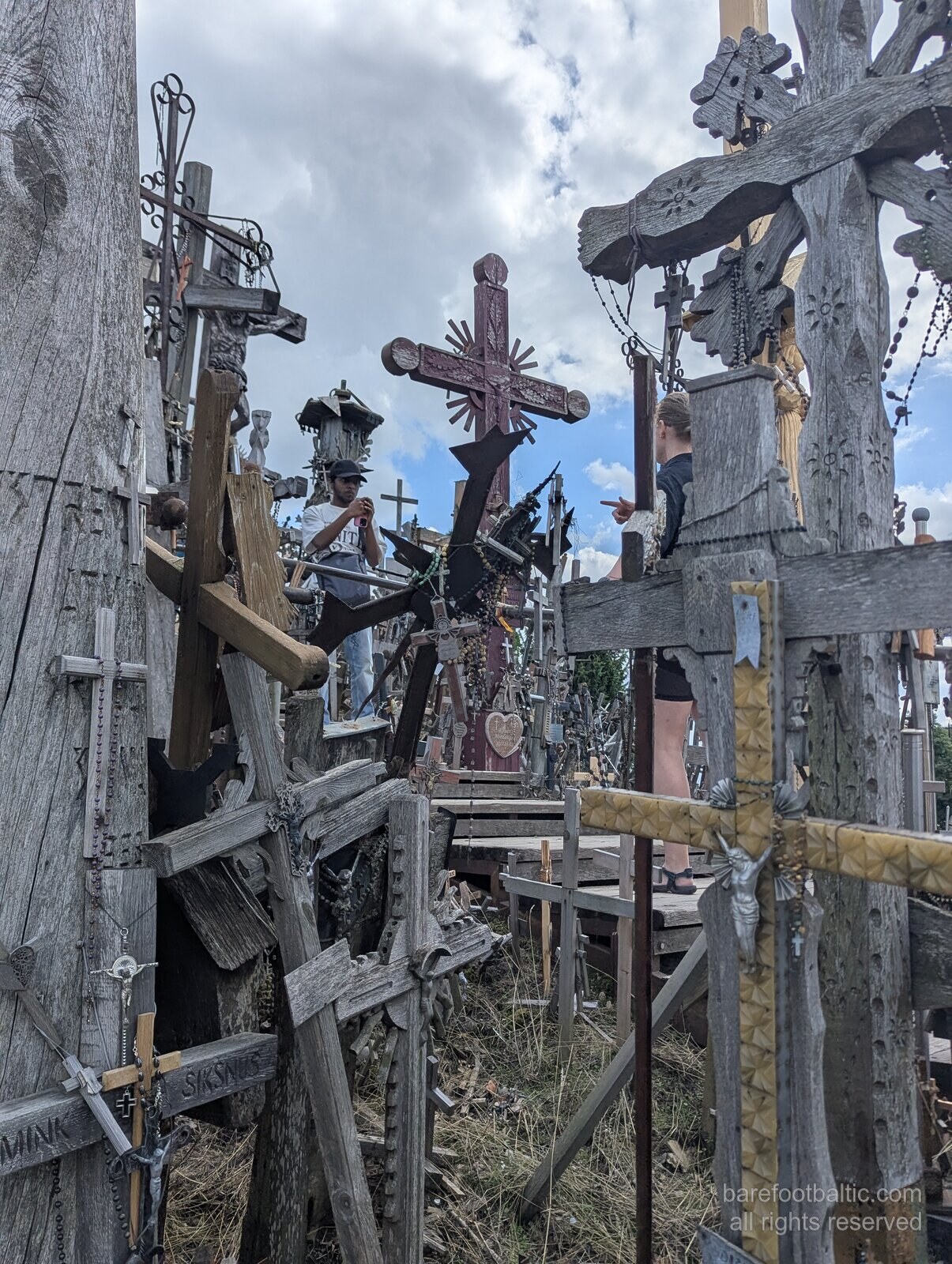
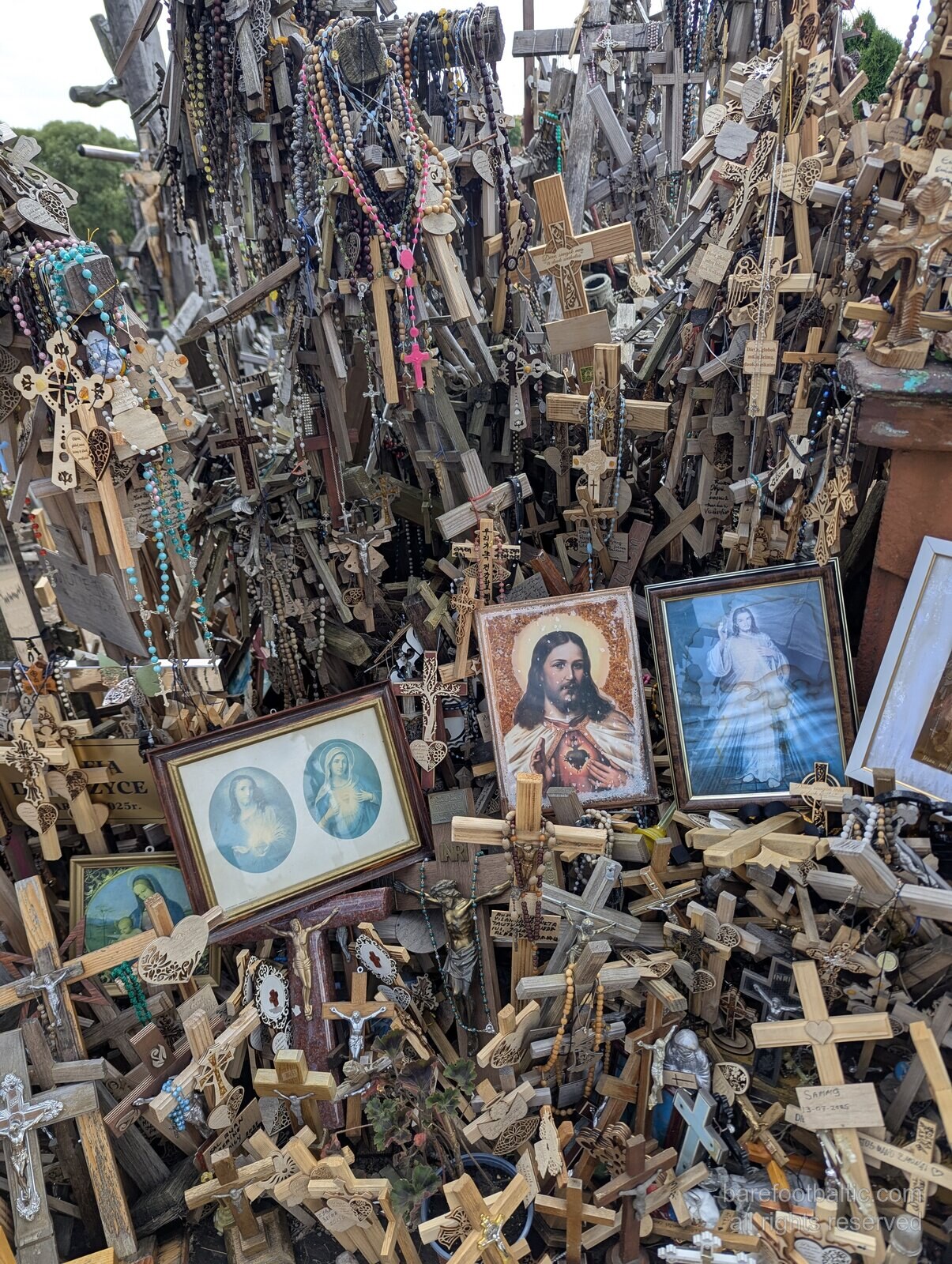
Somewhere between one hundred thousand and two hundred thousand crosses. Wooden ones the size of a child’s hand, hung on rosaries. Metal ones taller than a man. Carved Lithuanian folk crucifixes, rough pieces of wood lashed together with twine, statues of the Virgin Mary. Photographs of people who are not coming back. The wind moves through them and the smaller ones chime softly against each other, and the whole hill breathes.
This is Kryžių kalnas. Not a museum, not a cemetery, not officially anything at all. The Catholic Church does not own it. The Lithuanian state does not really own it. It belongs, if it belongs to anyone, to the people who keep coming and putting things on it, and have been doing so for almost two hundred years.
From Riga you can be standing on it in less than two hours.
How it began
Nobody knows exactly when the first cross went up. The most widely accepted account is that it began after the November Uprising of 1831, a Polish-Lithuanian rebellion against Russian imperial rule that was crushed brutally. The bodies of the fallen rebels were not returned to their families. Many were buried in unmarked graves, deliberately, so that there would be nowhere to mourn them.
So the families came to this small hill, the remains of an old hill fort, on common ground, in the middle of nowhere in particular. They put up crosses for the dead they could not bury. Not gravestones, just crosses. Somewhere to grieve.
The 1863 Uprising failed too. More crosses went up. By the time Lithuania declared independence in 1918, the hill was already a place where people came when they did not know what else to do.
This is the part of the story I find most affecting. The Hill of Crosses was not built by the Church, or by the state, or by anyone with a plan. It was built by ordinary people who needed somewhere to put their grief, and who made a place out of nothing because no one else would make one for them.
What the Soviets tried to do
The Soviets understood, immediately, that this hill was a problem.
It was Catholic, in a regime that was officially atheist. It was Lithuanian, in a regime that wanted Lithuanians to forget they were Lithuanian. It was a place where ordinary people gathered, in a regime that did not want ordinary people gathering anywhere it could not see them. After the deportations of 1941 and 1949, families began coming to the hill to put up crosses for relatives who had been taken to Siberia and never came home. The crosses, increasingly, carried inscriptions that the regime found intolerable.
In April 1961, the Soviets bulldozed the entire hill, burned the wooden crosses, sent the metal ones to scrap, and buried the stone ones. The site was guarded.
The crosses came back.
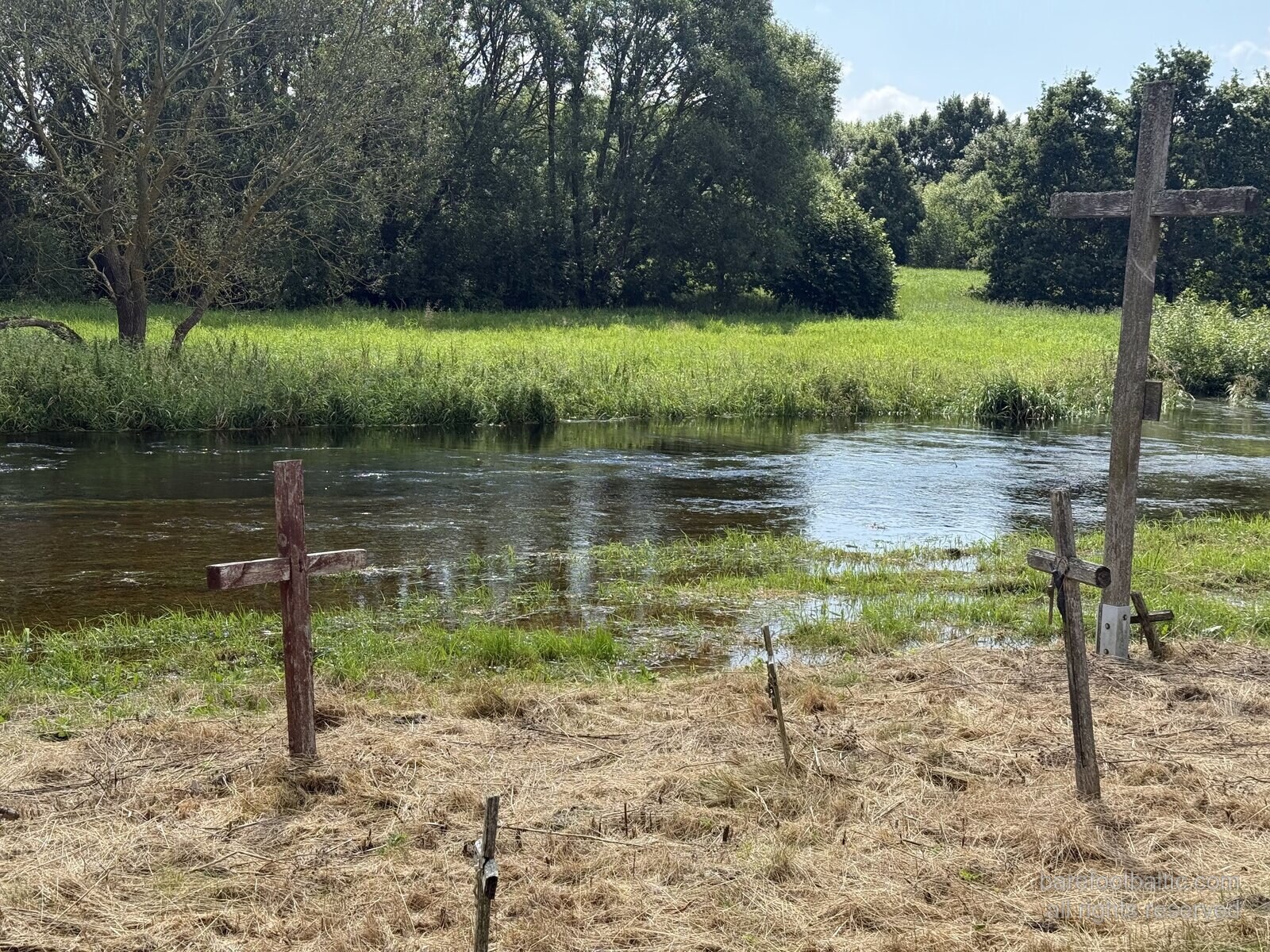
People walked up at night. They brought new crosses hidden under coats. Some of them, when guards were posted on the hill itself, made tiny crosses out of stones and grass and laid them flat in the meadow, where you could not see them from the road but you could find them if you knew where to look.
The Soviets bulldozed the hill again in 1973, and again in 1975. Each time, the crosses came back within weeks. There were serious proposals to flood the entire area and turn the hill into an unreachable island in an artificial lake. The KGB stationed itself there. Between 1973 and 1975 alone, an estimated five hundred crosses were destroyed every year.
It did not work. The hill outlasted the Soviet Union.
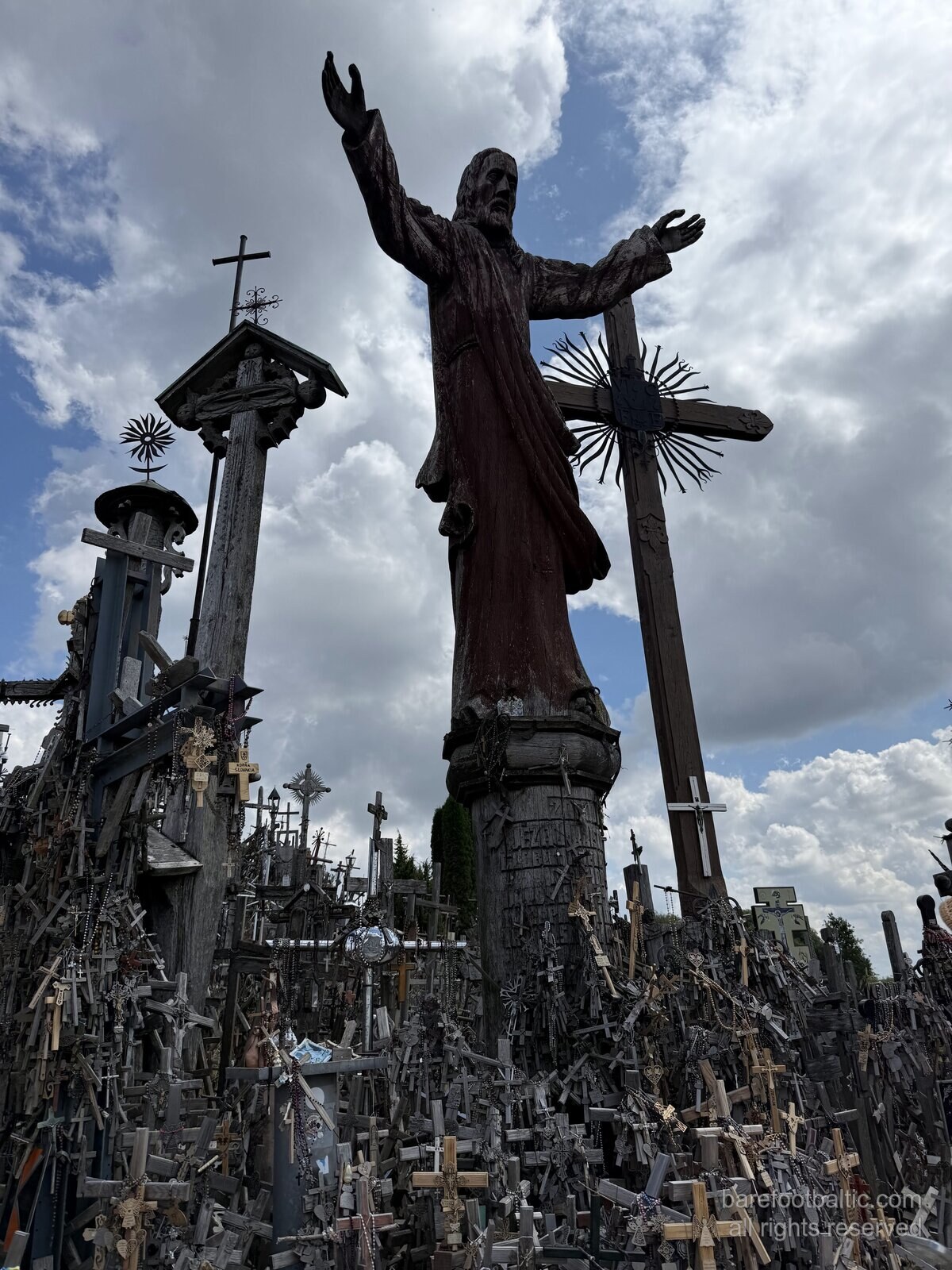
In September 1993, two years after independence, Pope John Paul II came to Lithuania and held Mass at the foot of it. He was a Pole himself, raised in a country that knew exactly what this hill meant. He called it a place of “hope, peace, love, and sacrifice.” He sent a large crucifix from the Vatican afterwards, and it stands on the hill today, as one of many.
You could fairly say that this is what the Soviet Union actually lost. Not the arms race. A contest of attrition with people who would not stop bringing pieces of wood to a hill in the middle of nowhere.
If you are not religious
You do not have to be Catholic to feel what is happening here. I am not particularly religious, and the first time I went I did not expect to be moved the way I was moved.
What is on this hill is not really about Catholicism, although Catholicism is its language. It is about what people do when official history will not let them grieve, when their dead have no graves, when their language is forbidden, when their nation has been told it does not exist. They make their own sites of memory. They create a place where the rules of the regime above them do not apply. They walk up a hill and put a piece of wood on it and walk back down again, and that small private act, multiplied across decades and tens of thousands of people, becomes a thing no government in the world has been able to destroy.
That is a story about faith, but it is also a story about what humans need. Something to hold on to when nothing else can be held. A small ritual that says I was here, this person was here, this happened, do not let it be forgotten.
When you walk among the crosses you are not really walking among religious objects. You are walking among grief and stubbornness and love and remembrance, which is what religion was always actually doing, underneath the doctrine.
If you have lost someone, this is a place where you can put something for them, and it will stay there with everything else, and the wind will move through it.
The drive
From Riga, the way I'd do this is to combine it with Rundāle Palace, which we already include on one of our day excursions. The route runs south through the Zemgale plain, flat, fertile, ancient farming country that has been growing wheat and rye for a thousand years, and then crosses into Lithuania.
You will pass small villages with wooden churches, fields of yellow rapeseed in May, lakes you could swim in if you stopped, roadside stalls selling smoked fish and honey. The countryside slowly slows you down. By the time you arrive at the hill you are already in the right state of mind for it.
The total drive from Rīga to the Hill of Crosses is about two hours each way, depending on traffic and how often you stop for the storks. From Rundāle, it’s roughly an hour and a half further south. Combining the two into a single long day works well. Rundāle in the morning, late lunch at one of the village cafés near the border, then the Hill of Crosses in the afternoon when the light is at its best for the crosses’ long shadows.
A word on the storks
If you come between late March and August, you will see them everywhere.
The white stork is one of the great pleasures of summer driving in this part of Europe. It’s baltais stārķis in Latvian, baltasis gandras in Lithuanian, and the official national bird of Lithuania. Latvia alone has roughly 10,500 breeding pairs, one of the densest populations anywhere in the world. Drive any rural road between April and August and you will see their enormous stick nests, three or four feet across, perched on every other electricity pylon, every chimney, every disused water tower, every wagon-wheel-on-a-pole that a thoughtful farmer has put up to invite them.
These are big birds. Adults stand over a metre tall, with a wingspan of nearly two metres, jet-black flight feathers against a brilliant white body, and long red legs and beaks that look as though they have been dipped in paint. They are also high up the food chain, and they know it. They eat frogs, small mammals, snakes, fish, large insects, even the occasional young bird. There is a particular confidence to the way a stork strolls across a freshly ploughed field, head held high, picking off worms and beetles with the unbothered air of a creature that has nothing to fear from anything in the vicinity. Watch one work a furrow for a few minutes and you understand exactly why every culture in their range has woven them into folklore. They look as though they have opinions about the weather.
Our storks fly to sub-Saharan Africa every autumn, to Kenya, Uganda, Tanzania, sometimes as far south as the Cape, and back again every spring. They cannot fly across large bodies of water, because they soar on rising thermals which only form over land, so they take the long way around. South through the Bosphorus, down the Levant, along the Nile valley, into East Africa. The round trip is several thousand kilometres each way. They mate for life, return to the same nest every year, and the older male of a pair will arrive a few days before his mate to make repairs. When she joins him there is an audible greeting, a rapid clattering of beaks called klabata in Latvian, after a wooden percussion instrument it sounds exactly like.
If you are here between September and March, you will see the nests but not their occupants. Empty wooden saucers on poles, waiting. There are worse things to be reminded of, in this country, than that the things one loves do come back.
In Latvian and Lithuanian folklore, a stork pair nesting on your property brings harmony, fertility, and good fortune to the household. People are pleased when storks choose them. A new pair settling on your chimney is the sort of news you tell your neighbours.
If you are doing this drive in the warm months, build in time for stops. The storks will be waiting in the fields.
A note on the border
Latvia and Lithuania have both been in the European Union since 2004 and the Schengen Area since 2007, which means that in normal times you can drive across the border without stopping at all. There is a sign in the forest, in two languages, and that is it.
That said, bring your passport or national ID card anyway. Schengen rules technically still permit identity checks at internal borders, particularly during periods of heightened security. Given everything happening on the eastern frontier in recent years, occasional spot checks do happen. It is also a good idea to have your insurance documents handy if you are driving a hire car. Nine times out of ten you will sail through without seeing a single border officer. The tenth time, you’ll be glad you brought the documents.
Practical information
Hill of Crosses (Kryžių kalnas)
| Detail | Information |
|---|---|
| Location | About 12 km north of Šiauliai, Lithuania. Coordinates: 56.0153°N, 23.4167°E. |
| Hours | Open 24 hours a day, every day of the year. There is no gate. |
| Entry | Free. There is a small donation box at the visitor centre. |
| Parking | Free parking lot at the entrance, with a small souvenir shop and a café. Spaces for cars and motorhomes. |
| Crosses for sale | Yes. Small wooden and metal crosses can be purchased at the visitor centre if you want to leave one. Prices range from a couple of euros to twenty or more for hand-carved Lithuanian folk crosses. |
| From Riga | Roughly 123 km, about 1 hour 45 minutes by car via the A7 / E67 (Via Baltica) and the A12. From Rundāle Palace it’s about 90 minutes further south. |
| From Vilnius | About 220 km, around 2.5 hours. |
| Plan for | 45 minutes to an hour on the hill itself, longer if you want to walk slowly. Most of the experience is the silence and the time, so don’t rush it. |
| Bring | Comfortable shoes (the path up is uneven), a layer if it is windy (it is almost always windy on the hill), and your passport for the border crossing. |
| What to leave behind | If you are bringing your own cross, no permit is needed for anything under three metres tall. Something smaller works too, like a written note, a rosary, a photograph. Many of the most moving things on the hill are not crosses at all. |
On our excursions
We do not currently include the Hill of Crosses on our standard day trips, because it makes for a long day when combined with Rundāle and we want our guests to enjoy each stop without rushing. But if you are visiting Latvia and you have a day to spend properly, here is the day-and-a-half we’d build for you. Rundāle Palace and the formal gardens in the morning, lunch somewhere along the route, the Hill of Crosses in the late afternoon, dinner back in Riga.
If you are interested, get in touch. We can arrange a private driver, a flexible itinerary, and proper time at both sites.
But even if you go on your own, go. Take a small cross, or a piece of paper, or nothing at all. Stand on the hill, listen to the wind moving through the smaller crosses, and read a few of the names you can read.
There are a lot of places in this part of Europe where people have been told their lives did not matter. The Hill of Crosses is the answer that ordinary people, over two centuries, have been quietly building to that.
It is worth the drive.
The Hill of Crosses isn't on our standard excursion list, since it's a longer day each way. We run it as a custom small-group day trip from Riga on request, often combined with the Šiauliai sun clock. Get in touch with your dates and we'll quote it.