First-time Indian applicants come to Schengen with the same story. Two months of paperwork. A single-entry visa keyed to the exact dates of one hotel booking, one country, six fixed nights, return ticket on file. No room to extend by a day if a city kept you longer. No room to take a Tuesday train across a border because the mood took you. The system, as you found it that first time, did not allow for any of that.
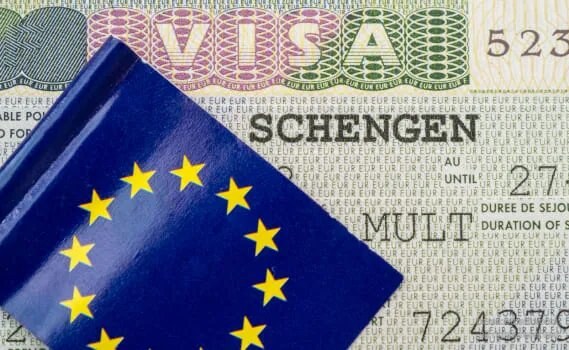
There is a way out of the single-entry trap. The EU calls it the visa cascade. It is not widely understood in India, which is a shame, because the cascade is how a careful traveller turns a handful of modest European trips into a passport stamp that is good for five years of casual visits.
I’m Daiga. I run Barefoot Baltic, a guided-tour operation in Riga. This post is the briefing I’d give a friend in Delhi or Bangalore who is trying to figure out how to make European travel work over the next decade.
One housekeeping note. I am not a visa agent and nothing here is legal advice. Everything below is verifiable from the EU Commission, the EEAS, and embassy pages that I link to at the bottom. The rules move. Re-check the consulate website you plan to use before you submit anything.
The short answer, before the long version
- The Schengen visa cascade rewards travel history with longer-validity visas. Show the consulates that you have travelled responsibly and the next visa is longer than the last one.
- For Indian passport holders, the rule was loosened on 18 April 2024. Two lawfully-used short-stay Schengen visas inside the previous three years now qualifies an Indian applicant for a two-year multi-entry visa, with a five-year multi-entry visa to follow after that (capped by remaining passport validity).
- That is one rung shorter than the general Visa Code cascade. Under the standard rule, non-India applicants need three visas in two years to reach a one-year multi-entry, and only then climb to two and to five.
- The cascade is policy guidance, not a legal entitlement. Consulates retain discretion. The German Foreign Office puts it plainly on its India page: applicants lack entitlement to these categories.
- Refusal rates for Indian applications are real and uneven. The 2024 overall refusal rate was around 15% (about 165,000 refusals on roughly 1.1 million applications). Country-by-country it ranges from about 6% (Iceland) to over 50% (Slovenia).
- The short-stay visa fee is €90 for adults (raised from €80 in June 2024), €45 for children aged six to twelve, free for under-sixes. Non-refundable. Plus VFS handling and the mandatory medical-cover travel insurance.
What the cascade actually is
The Schengen visa cascade is a piece of EU policy that says, in effect: if you have shown the consulates you can travel responsibly, the validity of the next visa you receive goes up. It sits inside Article 24 of the EU Visa Code (Regulation 810/2009, amended in 2019), which governs short-stay visas for all 29 Schengen states.
The standard cascade runs in three steps. Three lawfully-used short-stay visas in the previous two years makes the applicant eligible for a one-year multi-entry visa. Use that one-year visa responsibly and the next step is a two-year. Use the two-year responsibly and the rung after that is a five-year, capped at the remaining validity of the passport.
If your file looks clean and your travel history checks out, the consulate’s default position is to push validity up, not back down. The cascade is not automatic, though, and the consulate retains discretion at every stage. What changed for Indian passport holders in April 2024 is that the first rung is shorter.
Why this particularly helps Indians (the April 2024 rule)
On 18 April 2024, the European Commission adopted a specific implementing decision for Indian nationals residing in India. The reference is C(2024) 2434 final. The EEAS, the EU’s diplomatic arm, announced it four days later under a press release titled “European Union adopts more favourable Schengen visa rules for Indians”, and the German Foreign Office mirrored it on its India page within weeks.
The operative rule is straightforward. An Indian national who has lawfully used two short-stay Schengen visas inside the previous three years can be issued a multi-entry visa valid for two years, with a five-year multi-entry visa to follow if the passport supports it.
Read that against the general rule. The standard cascade asks for three visas in two years to reach a one-year multi-entry. The India-specific rule asks for two visas in three years and skips the one-year rung entirely. The next visa after that is the same five-year as under the general cascade, but you arrive there one full step sooner.
For political context, India was the third-largest source of Schengen visa applications globally in 2024 (behind only China and Turkey), with roughly 1.1 million applications submitted. The cascade decision sits inside the EU-India Common Agenda on Migration and Mobility.
What “lawfully used” means
This is the phrase that does the work. People miss it.
A previous visa is “lawfully used” if you actually travelled with it, entered Schengen on or after the dates declared, came home on or before the exit dates declared, and did not break any rule of stay while inside. Consulates check this against the stamps in your old passport and against the Schengen Information System, which they share with each other.
What disqualifies a previous visa from counting toward your cascade:
- A visa you obtained and never used. Approved but not travelled means the visa is valid. It is not “used” for cascade purposes.
- A trip on which you overstayed, even by one day. Consulates take overstay seriously and it can disqualify you from the cascade for years.
- A trip where you entered on the wrong country’s visa for the main destination. If you applied through France but Germany was clearly the main destination, the next consulate can raise this.
- A recent refusal on your record. A refusal does not disqualify you from re-applying, but it complicates the file. Address the reason in the refusal letter the next time you apply.
What counts as fine:
- Short trips. A four-day visit counts.
- A trip that bounces between two or three Schengen states, as long as your main destination and entry-and-exit points line up with what you declared on the form.
- Coming home a day early. Going home a day late is what causes problems.
One date to watch: if your second qualifying visa is more than three years old by the time you apply for the next one, the clock has run out. The two-visas-in-three-years rule is rolling. Plan the second trip well inside that three-year window.
The strategy, in plain terms
Two Schengen trips in roughly eighteen to twenty-four months, and the third application is the one that opens the ladder. Modest length is fine. Five to ten days each is plenty, because the application does not reward expensive travel. It rewards a clean file.
What a clean file looks like by the time the consulate reviews your third application:
- Two prior entry stamps and two prior exit stamps in the passport, dates matching what you declared on each application.
- A consistent story about your main destination. If you applied through France twice, applying through France a third time is more legible to a consular officer than switching to Spain.
- A stable bank picture. Six months of statements showing you can fund the trip without taking on debt for it.
- An anchor at home that says you have a reason to return on schedule. A job or family obligations that make the return ticket non-negotiable, the kind of thing that explains why every previous return was on time and why the next one will be too.
- Travel insurance covering at least €30,000 in medical expenses. This is the Schengen-wide minimum and the form will ask for it.
What undermines a clean file: employment gaps that line up with the travel dates, last-minute itinerary changes the consulate cannot verify, hotel bookings that look like free-cancellation placeholders rather than serious plans, and any recent refusal from any Schengen country.
Budget Schengen states that work for cascade-building
Several smaller and mid-tier Schengen states are sensible places to apply from India. Portugal has efficient Indian-facing consular operations and good off-season pricing. Czech Republic and Poland are both well-priced and reasonably straightforward to apply to. Slovenia is small and cheap, though its published refusal rate for Indian applicants is on the high side and worth weighing. None of these is a wrong answer for cascade-building.
Two reminders worth posting next to that list. The United Kingdom is not part of the Schengen visa system and never has been. A Schengen visa is not valid for the UK, and Brexit did not change that. Romania and Bulgaria joined Schengen at air and sea borders in March 2024 and at land borders on 1 January 2025, so a Schengen visa now covers them at any port of entry. Cyprus is still working toward full Schengen membership and remains outside the system for now.
Why the Baltics, in particular, are well suited to cascade-building
One of those sensible options is the Baltic three. Off-season costs in Riga, Vilnius and Tallinn are a fraction of Paris or Rome in peak season. A central Old Town hotel in Riga for a December weekend typically books at €60–120 a night. The visa-application paperwork is the same in either case. The trip costs less, so the financial documentation in your file is easier to assemble.
The Latvian, Lithuanian and Estonian consulates in Delhi and Mumbai tend to run shorter queues than the bigger Schengen powers. Sweden has been offering next-day appointments at all Indian centres while Germany’s Indian operations have at times been backed up by a couple of months at peak. Smaller consulates move faster.
A short trip of five to seven days, possibly with a side hop to a neighbouring country, is easy to defend at a consulate interview because each claim on the form lines up with a document in the file. Flight cost from India to the Baltics is also roughly comparable to flying to France or Germany, with most routings connecting via Istanbul, Helsinki, Warsaw or Frankfurt.
And the Baltics in winter is worth the trip on its own. Old towns thick with snow most years. The cascade benefit is something you collect at the airport on the way home, not the reason to go.
Where it can still go wrong
Consulate discretion is real and the cascade is policy guidance rather than a guaranteed outcome. If your third application’s file looks weak, a consulate can issue a shorter validity than the rule would suggest. People do get one-year visas where the rule would point to two. People occasionally still get refused at the third application. The mechanism is favourable, not foolproof.
Previous refusals matter. Schengen consulates share data through the Visa Information System, so a refusal from Italy in 2022 is visible to a consulate in Hungary in 2026. You can re-apply, but the next application has to address the reason the previous one was refused. The refusal letter spells it out. Treat it as your work list.
The cascade clock can lapse. If your second qualifying visa is more than three years old when you apply for the next one, the rolling window has reset and you are effectively starting again. Plan the trips to sit comfortably inside the three-year window.
Refusal-rate context. The 2024 overall refusal rate for Indian applications was about 15%, but the country-by-country variation is wide. Slovenia rejected roughly half the Indian applications it received in 2024. Iceland approved more than 94% of its much smaller intake. Look at the rate, not the total volume, when you choose your consulate.
This strategy is wrong for you if your trip is anything other than tourism. Work assignments, family reunification and long-stay national visas are different categories the cascade does not touch. It is also wrong for you if your passport has fewer than three years of remaining validity at the moment you apply. Sort the renewal first.
What this means for the rest of your travel decade
If you have already done Bali, Dubai and Thailand and have been wondering how to open Europe up without committing to a single rushed first trip, the cascade is the road in. Two modest visits, well-documented and finished on schedule, and your third application is the one that gives you a two-year multi-entry visa. After that, a five-year. With a five-year multi-entry Schengen visa you can fly to Europe on a long weekend the way you used to fly to Singapore.
Read the Visa Code rule on cascade once. Read your chosen Schengen-country consulate’s India page once. Then plan the first two trips with the third application in mind.
If a small-group, women-led week through Estonia, Latvia and Lithuania is the kind of first trip you want, the Baltic Trio page has dates, the route, and the small print.
Two trips inside three years and the cascade window opens. After that, the rest of your European travel decade is on a five-year visa.
Primary sources used in this post
- European External Action Service: European Union adopts more favourable Schengen visa rules for Indians, 22 April 2024 — eeas.europa.eu
- European Commission Implementing Decision C(2024) 2434 final, 18 April 2024 — home-affairs.ec.europa.eu
- EU Visa Code, Regulation 810/2009 (consolidated, 2020 version) — eur-lex.europa.eu
- German Federal Foreign Office, New Delhi: Important Information for Schengen-Visa applicants — change in the Schengen cascade — india.diplo.de
- EU Commission Schengen Visa Statistics 2024 (refusal-rate figures cited via the European Commission’s annual release and onward press coverage in Business Standard, May 2025).